Pokies Tips and Tricks: What Helps and What Doesn’t
 Available in AU
Learn how budgets, random outcomes, game modes and bonus terms shape a session without turning tips into promises.

Table of Contents
- What a Pokie Tip Can—and Cannot—Change
- How RTP and Random Number Generation Shape a Session
- Pokies in Australia: Terms, Access and Regulation
- Set a Session Budget Before You Start
- Why No Pokies Strategy Can Guarantee a Win
- Check Bonus Terms Before You Play
- Free Spins, Demo Modes and Play for Entertainment
- Playing Dragon Link Without Chasing a Pattern
- 5 Dragons: Keep Game-Specific Claims in Check
- Playing Pokies on Mobile Without Losing Track of Time
What a Pokie Tip Can—and Cannot—Change
Advice about pokies can be useful when it helps you decide how to approach a session. It cannot make a machine more likely to produce a winning result. That distinction matters because practical choices are often presented alongside claims about “systems” for beating a game, even though they affect different things.
A tip such as deciding in advance how much you are prepared to spend can shape your own behaviour. It gives you a point at which to stop, rather than leaving the decision to a run of wins or losses. Choosing not to play when you feel pressured or distracted is another practical choice. These steps can help you keep control of your actions; they do not alter the outcome of a spin.
A machine does not remember whether its previous spins paid out. Each spin is random and independent of the results before it. A string of losses does not make a win due, and a recent win does not make another one more likely. The sequence can look meaningful to a person watching it, but the previous results do not provide a signal about the next one.
Pokies tips are most useful when paired with a clear-eyed look at the casino behind the games. This list gives you a concise reference to each operator’s stated licensing details and any other available facts.
License: Curacao eGaming OGL/2024/923/0383 (Antillephone N.V.) · Min. deposit: A$30 WinSpirit Casino lists a Curaçao eGaming OGL/2024/923/0383 licence held by Antillephone N.V. Its stated minimum deposit is A$30.
License: Curacao Gaming Authority (Jumpman Gaming Ltd) DragonSlots Casino lists a Curaçao Gaming Authority licence, with Jumpman Gaming Ltd named as the operator.
License: Curacao (operating since 2017) · Min. deposit: A$20 Uptown Pokies has operated since 2017 and lists a Curaçao licence. Its stated minimum deposit is A$20.
License: Curacao Gaming Control Board (TechSolutions Group N.V.) Bizzo Casino lists a Curaçao Gaming Control Board licence, with TechSolutions Group N.V. named as the operator.
License: Curacao Gaming Control Board OGL/2023/176/0095 (Hollycorn N.V.) Rollero Casino lists Curaçao Gaming Control Board licence OGL/2023/176/0095, held by Hollycorn N.V.
License: Curacao Gaming Control Board OGL/2023/174/0082 (Dama N.V.) SpinsUp lists Curaçao Gaming Control Board licence OGL/2023/174/0082, held by Dama N.V.
License: Curacao eGaming (Dama N.V.) JeetCity Casino lists a Curaçao eGaming licence, with Dama N.V. named as the operator.
License: Curacao Gaming Control Board OGL/2023/176/0095 (Hollycorn N.V.) LuckyVibe lists Curaçao Gaming Control Board licence OGL/2023/176/0095, held by Hollycorn N.V.
License: Curacao eGaming (Roby Games Ltd) Roby Casino lists a Curaçao eGaming licence, with Roby Games Ltd named as the operator.
License: Curacao Gaming Control Board JustCasino lists a Curaçao Gaming Control Board licence. No other operator details are provided here.
This is why tips based on timing do not work as a way to improve your chances. Waiting until a particular time, stopping after a certain pattern, or pressing the button at a chosen moment does not change the machine’s odds. The same applies to lucky charms and rituals. They may make the experience feel more familiar or personally significant, but they do not affect the result.
Betting patterns are also not a way to turn a losing game into a favourable one. Increasing or decreasing your bet after a win or loss changes how much you put at risk on a spin. It does not make that spin more likely to win. A larger bet can mean a larger return if a winning result occurs, but it also means more money is exposed to the outcome. Treating a bet change as a prediction confuses the size of a possible result with the chance of receiving it.
The difference between a possible win and a likely win is important. A large prize may be available, but its presence does not mean a player can identify when it is about to arrive. For scale, the stated chance of landing a typical $5,000 prize on a machine played at $1 per spin is odds of 9,700,000 to 1. That figure is not a schedule or a countdown: it does not tell you that a prize is due after a particular number of attempts.
Online, tips can appear more persuasive when they are packaged as a repeatable sequence: choose a certain game, use a prescribed bet pattern, then wait for a signal. But unless a choice changes the actual terms of play, it cannot change the probability of the machine’s next result. A personal routine may help you remember to pause or stop. It is not evidence that the machine is responding to your routine.

When you assess a tip, separate its claim into two questions. Does it help you decide what you will do, such as when to stop? Or does it claim to predict or influence what the machine will do? The first kind can be a useful personal rule. The second has no basis in the independence of spins. If the advice relies on a “hot” or “cold” streak, a lucky moment, or a special sequence, it is treating past outcomes as information about a future spin when they are not.
The practical value of a tip is therefore about managing your own decisions, not finding a route to a guaranteed win. You can choose whether to play and set boundaries for yourself, but no strategy, timing method, or charm can improve your chance of winning on a pokie. A clear distinction between personal control and machine outcomes makes it easier to recognise advice that promises more than it can deliver.
How RTP and Random Number Generation Shape a Session
RTP describes a game’s return across a very large number of spins. It is the share of all money bet that a pokie is designed to pay back over millions of spins—not a prediction of what you will receive during one session. If a game has a stated RTP, that figure describes its long-run behaviour under the game’s rules. It does not set a minimum return for each player or each visit.
Australian gaming machines are required to return between 85% and 92% of the money bet over their lifetime. That requirement concerns aggregate play, not an individual session. A player’s results can be far above or below the long-run percentage because only a small portion of all spins is observed in any one session.
The mechanism that selects outcomes is a random number generator, or RNG. It produces values used to determine each spin’s result. Licensed platforms may use RNG technology certified by eCOGRA or GLI. Certification concerns how the system generates outcomes; it does not mean that a particular result is due, that a machine will pay soon, or that the next spin can be inferred from earlier ones.
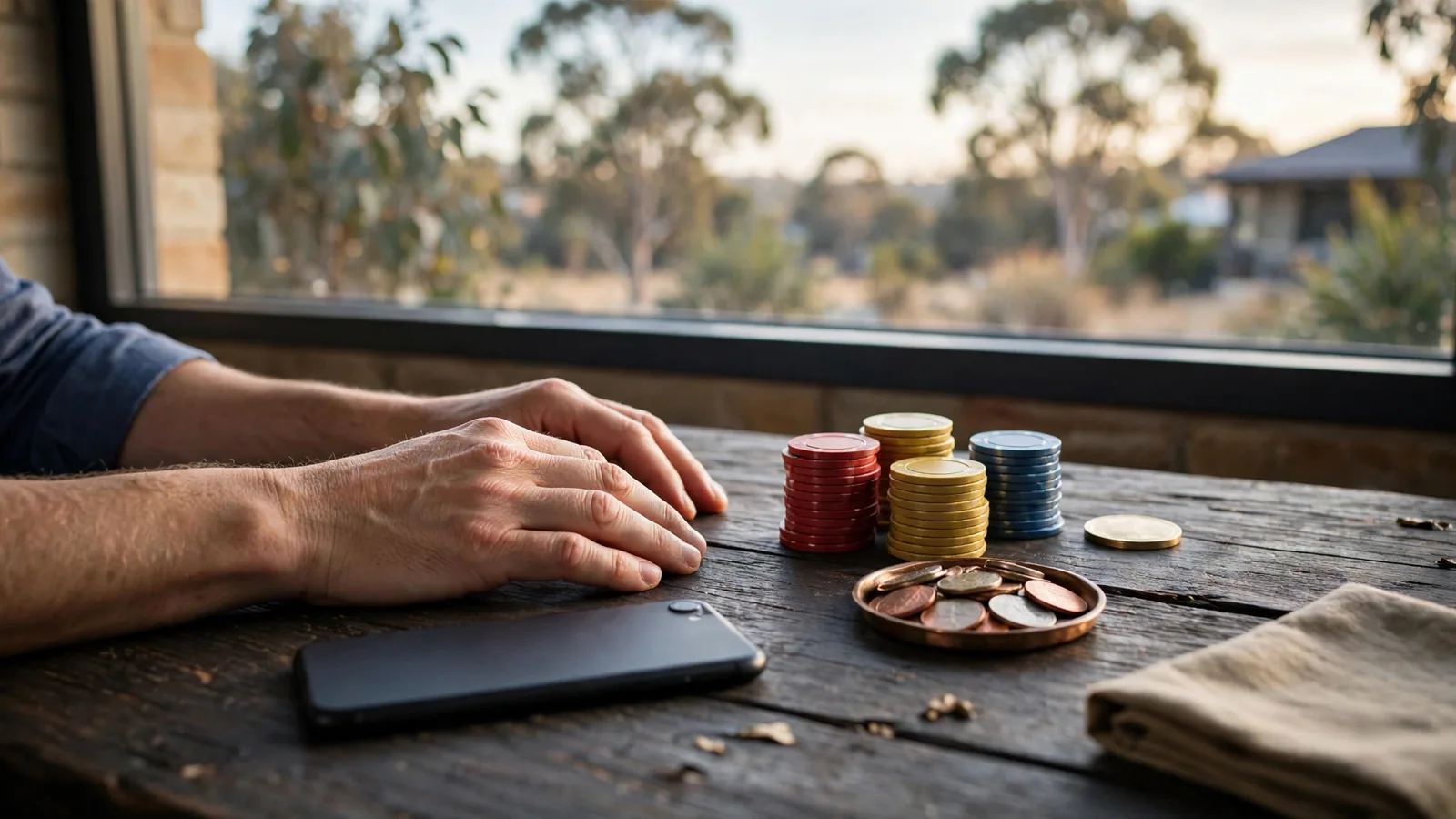
Each spin is independent. The RNG does not need to compensate for a run of losses by producing a win, nor does a recent win make another win less likely. A sequence can look unusually favourable or unfavourable while remaining consistent with random results. The sequence itself does not reveal what the next result will be.
This distinction explains why a short run cannot verify a game’s RTP. A small sample can differ substantially from the long-run return simply because random outcomes vary. One specialist review reported a median RTP of 96.2% across an analysis of 6,847 sessions, compared with the games’ declared values. That finding describes the sessions included in that review; it is not a promise about an individual player’s return or a universal result for every game.
RTP also does not describe the shape of the results. Two games with similar long-run returns can distribute payouts differently: one may produce smaller returns more often, while another may have less frequent, larger payouts. The RTP alone does not tell you which pattern a particular session will follow, and a few results are not enough to establish a game’s long-run behaviour.
When you read an RTP figure, treat it as a statistical property of the game over extensive play, not as a target for your own session. RNG technology determines outcomes spin by spin; RTP summarises the expected return across a much larger body of play. Neither can turn a brief sequence into a reliable forecast.
Pokies in Australia: Terms, Access and Regulation
“Pokies” is the Australian term for slot machines. The word is common in everyday conversation, but it does not describe a separate legal category: online pokies are treated as online casino-style games under Australian law.
The key rule is set by the Interactive Gambling Act 2001. It is illegal for an operator to provide real-money online casino games to people who are physically in Australia. That prohibition covers online slots and pokies, as well as casino-style poker, blackjack and roulette. The rule concerns the service being offered to customers in Australia, not just the country where the operator is based.
Legal Restriction
Under the Interactive Gambling Act 2001, it is illegal for operators to provide real-money online casino games to people physically located in Australia.
This distinction matters when you see a site describe itself as licensed overseas. A licence from another jurisdiction is not an Australian authorisation to provide real-money online casino games to people here. It does not override the restriction in Australian law. A foreign licence may govern an operator in the place that issued it, but it does not make the service lawful to provide in Australia.
What the law means for players
The legal position is often blurred by claims that Australian residents can access offshore-licensed pokies. Technical access and lawful provision are not the same thing. A site loading on a device does not establish that its operator may legally offer casino games to customers in Australia.
The Act places the relevant prohibition on operators providing these services. An Australian player is not subject to a fine or criminal prosecution simply for playing at an offshore casino without a local licence. That does not make the service lawful for the operator to provide, or make an offshore licence equivalent to local approval. Keeping those points separate avoids a common misunderstanding: the restriction is not a general ban on saying or reading the word “pokies”; it is a restriction on the provision of real-money online casino gambling services to people in Australia.
The law also affects how such services may be promoted. Advertising online casino gambling services to Australian audiences is prohibited. As a result, promotional claims, rankings and descriptions of offshore casinos should not be treated as official guidance about what is lawful or as proof that a service is approved for Australian customers.

How to read licence claims
A site may display a licence badge or refer to an overseas regulator. That information alone does not answer the question that matters for someone in Australia: whether the operator is legally allowed to offer real-money online casino games here. Under the Australian framework, an offshore licence does not confer that permission.
Affiliate reviews and promotional pages may describe operators as licensed or list jurisdictions such as Malta, Gibraltar or Curaçao. Those statements may concern the operator’s status in another jurisdiction; they should not be read as evidence of Australian authorisation. A specialist review, for instance, may report licence details for the services it assesses, but its assessment does not change the scope of the Act. Nor does a list of providers or games establish that Australians can lawfully use them for real-money play.
Be cautious with language such as “Australian-friendly” or “available to Australian players”. These phrases can describe a website’s intended audience or its technical accessibility, rather than its legal status under Australian law. A payment option, Australian currency display or local wording likewise does not establish that online casino services are authorised here.
What to take from the rules
For Australian readers researching pokies, the useful starting point is the difference between a local term and a legal permission. “Pokies” tells you what kind of game is being discussed; it does not tell you whether a particular online service can legally provide it to people in Australia. Likewise, an overseas licence is not a substitute for Australian approval.
Offshore Licensing
An overseas licence from jurisdictions like Malta or Curaçao does not override Australian law and is not an authorisation to provide real-money games to people in Australia.
The Interactive Gambling Act 2001 prohibits operators from providing real-money online casino games, including pokies, to customers physically located in Australia. This is the market-level rule to keep in view when interpreting offshore licensing claims or promotional material. It is possible for a website to be reachable while the service it offers remains prohibited for the operator to provide to Australians.
Set a Session Budget Before You Start
A session budget is a limit on what you are prepared to spend, not a prediction of what a pokie will take. Set it before opening a game, while you can still make a decision without reacting to a win or loss. Treat the amount as entertainment spending: once it is gone, stop rather than adding funds to recover it.
You can estimate theoretical loss from three inputs: bet size, number of spins and RTP. The calculation is:
Expected loss = bet size × number of spins × (1 − RTP)
Use RTP as a decimal in the calculation. For instance, an RTP of 96% becomes 0.96, so the part used in the calculation is 1 − 0.96. Multiply that by your bet size and planned spins. The result estimates the average loss across many spins at those settings; it does not forecast the result of one session. Your actual result can be higher or lower, including a win, because outcomes vary.
The estimate helps compare plans. If you keep the bet size the same but plan more spins, the theoretical loss rises in proportion to the spin count. If you keep the spin count the same but raise the bet, it rises in proportion to the bet. That makes bet size and session length practical controls over exposure, even though neither changes the chance that a particular spin wins.

Choose a spending ceiling that remains acceptable if the session ends in a loss. Then use a deposit limit to prevent adding more than that amount during the period you have chosen. A limit works best when it is set before play, rather than adjusted in response to the balance on screen. A session timer adds a separate stopping point: it interrupts play after the period you planned, including when you have not yet reached the spending ceiling. Set both controls to support the same plan.
The calculation also helps explain why the pace of play matters to a budget. The bet size and RTP may stay unchanged, but a higher spin rate means more spins occur in the same time. Theoretical expected loss can therefore accumulate faster. A specialist review has noted that mobile interfaces can make spins easier to start, with less friction between them; that observation is a reason to monitor pace, not a claim that every player or session will behave the same way. A timer can make the planned duration visible when the interface makes it easy to continue.
Keep the estimate, deposit limit and timer distinct. The estimate translates a proposed session into expected exposure. The deposit limit caps how much money you make available. The timer caps how long you intend to play. Together they make a budget operational: you can decide in advance what spending and duration are acceptable, then stop when either boundary is reached. None of these controls guarantees a particular result, but they can prevent a session from expanding beyond the limits you chose.
Budget Calculation
Identify your bet size, planned number of spins, and the game’s RTP (as a decimal).
Subtract the RTP decimal from 1 (e.g., 1 − 0.96 for a 96% RTP).
Multiply the bet size by the number of spins and then by the result from Step 2 to find the theoretical expected loss.
Why No Pokies Strategy Can Guarantee a Win
A strategy can change how much you risk per spin or how long your balance lasts, but it cannot turn a pokie into a reliable source of returns. The relevant measure is expected value: the average result across a very large number of bets. Because the house edge leaves the expected return below the amount bet, every pokie strategy has negative expected value. A winning session is possible; a method that makes wins more likely overall than losses is not.
RTP describes the share of total bets a game returns over a long period. The difference between that return and the full amount bet is the house edge. Choosing a game with a higher RTP can reduce the edge per spin, all else being equal. It does not remove the edge, and it does not mean that a particular session will return the stated proportion.
The RTP Threshold Strategy is useful only in this limited sense: it selects games above a chosen RTP threshold to reduce the per-spin house edge. That is a comparison between games, not a way to create positive expected value. Even when the selected game has a smaller edge, the expected result remains negative. The strategy therefore cannot guarantee a win or make continued play profitable.

This distinction matters when assessing tips for winning on the pokies. A tactic that changes the size or frequency of bets may affect the pace at which money is risked, but it does not reverse the game’s expected return. Nor does a favourable result in one session show that a strategy has overcome the house edge. Short-term outcomes can differ from the long-run expectation.
Volatility describes how unevenly a game’s returns tend to arrive. For a limited session budget, a high-RTP, low-volatility game can produce smaller wins more often and may extend playing time. That trade-off concerns the pattern and pace of results, not the underlying expectation. More frequent small wins do not mean that the total returned will exceed the total bet, and a longer session is not protection against loss.
This is why “winning tips” need to be separated into two categories. Choices such as comparing RTP or selecting lower volatility can affect the size of the edge or the shape of a session. Claims that a system can beat the house edge promise something different: positive expected value. No pokies strategy achieves that. A smaller disadvantage is still a disadvantage.
A useful test for any claimed method is to ask what it changes. If it changes game selection, bet size or session duration, it may alter exposure, but it does not make outcomes favourable in expectation. If it claims to make the machine pay, guarantee a return or recover losses, it is claiming an effect that the house edge does not support. A strategy can describe how play is structured; it cannot guarantee the result.
Check Bonus Terms Before You Play
A bonus amount is not the same as the amount you must bet to meet its wagering requirement. The requirement is a multiplier applied to the bonus, and the result is the total turnover required under the offer’s rules.
Bonus Wagering
Example: $100 bonus × 40x requirement = $4,000 in total bets.
For instance, a specialist review describes a $100 bonus with a 40x wagering requirement. The calculation is $100 × 40, so the required total is $4,000 in bets. A separate specialist review illustrates a A$100 bonus at 30x: A$100 × 30 means A$3,000 in total bets. These are examples from individual reviews, not standard terms that apply to every offer. Check the specific offer to see which amount the multiplier applies to; it may refer to the bonus, the deposit, or another defined figure.
“Total bets” means the sum of eligible bets placed while meeting the conditions, not a single bet and not necessarily money you can withdraw. Whether a game contributes to the requirement, and how much it contributes, depends on the written terms. If some games are excluded or count differently, playing them may not advance the requirement as you expect.
The maximum bet while a bonus is active is a separate condition. A specialist review reports bonus caps in the A$5–A$10-per-spin range, but terms differ between offers. Do not treat that reported range as permission to bet at its upper end: keep each spin at or below A$5, and follow any lower cap stated in the offer. The terms may define a breach as grounds to remove the bonus or void related winnings.
Before accepting an offer, locate the wagering multiplier, its calculation base, eligible games, maximum bet, and any rules about when the requirement expires or which winnings qualify. Read the conditions as a set: meeting the turnover figure does not override a breach of another rule. If a term is unclear, do not assume the more favourable interpretation. You can decline the offer rather than play under conditions you cannot verify.

These checks concern the offer, not a method for improving a pokie’s outcome. A large turnover requirement can mean placing many eligible bets before the bonus conditions are met; it does not make the bonus equivalent to cash or ensure that you will finish ahead.
Free Spins, Demo Modes and Play for Entertainment
A specialist review reports that winnings from free spins can be subject to wagering requirements of 20x to 40x. This is a report about particular terms, not a fixed rule: the conditions attached to an offer depend on its own terms. Before accepting one, check how much must be bet, which games count towards that total, whether a maximum bet applies, and whether winnings are capped or expire. A displayed win may not be withdrawable until the stated conditions are met.
Free spins are not the same as demo play. They are spins linked to an offer, and any winnings may remain subject to its conditions. Read the offer’s rules before activating it; otherwise, you may mistake a balance shown on screen for money that is available to withdraw. The label “free” does not explain what restrictions apply to the resulting winnings.
A demo mode lets you try a game without staking real money. It can help you understand the controls and how the game presents its features, but it does not reproduce the financial consequences of real-money play. Results in a demo do not establish what will happen in later play, and a demo balance is not cash.
For entertainment, keep the distinction clear: demo play is practice with no real-money stake, while free spins may form part of an offer with rules attached. Neither provides a reliable way to predict results or secure winnings. In Australia, real-money online casino games are prohibited services when provided to people in the country, so information about these formats should not be taken as an invitation to use them.
Playing Dragon Link Without Chasing a Pattern
When you play Dragon Link, a run of similar results can look like a signal. It is not evidence that the next spin is more likely to pay, or that a win is overdue. Each spin is random and independent of the spins before it. The machine does not use a previous loss to compensate with a win, and a recent win does not make another one more likely.
This matters because people naturally look for order in sequences. A group of losses may seem to form a “cold” phase; a win after them may appear to confirm that the game has turned. But those are descriptions of what has already happened, not reliable information about what will happen next. The same applies to repeated symbols, near misses or a sequence that seems to be building towards a result. Without evidence that past outcomes affect future ones, there is no sound basis for treating such patterns as clues.
Tips for playing Dragon Link should therefore focus on separating observation from prediction. You can notice what has happened, but you cannot use that record to calculate that the next spin is due to pay. A tracking note or remembered sequence may describe your session, yet it does not change the machine’s next result. Likewise, changing your bet after a run of losses does not make a win more likely; it only changes how much you put at risk on a spin.

Timing does not provide a shortcut either. Starting at a particular time, waiting between spins, or playing more quickly does not improve the chance of winning. Nor can a ritual or lucky charm alter the outcome. These actions may make the session feel more controlled, but they do not change the random process. Treating them as a method for improving odds can encourage you to keep playing in pursuit of a result that the previous spins cannot promise.
Be cautious with advice that claims to identify a “hot” moment or a pattern specific to Dragon Link. Such a claim needs reliable evidence that the game’s outcomes depend on earlier spins. A sequence that appears persuasive in one session is not enough: random results can produce clusters and streaks without creating a usable prediction. No special timing or playing technique turns those observations into an advantage.
A practical approach is to decide what you will do before the session and follow that decision rather than revising it in response to a streak. If the reason for continuing is that a win feels close, pause and recognise that the feeling is not information about the next spin. If the reason for changing your bet is that recent results seem to signal a shift, remember that the previous outcomes do not supply that signal.
The useful limit of any Dragon Link tip is simple: it can help you recognise unsupported claims, but it cannot reveal the next result. Play should not depend on a supposed pattern, a lucky time or a belief that losses must soon be returned. Each spin stands on its own.
5 Dragons: Keep Game-Specific Claims in Check
When you look for tips about 5 Dragons, separate general advice about pokies from claims about this particular game. A tip that says to wait for a certain symbol, change your bet after a run of losses, or play at a particular time describes a supposed pattern—not a reliable way to improve your chances.
Each spin is random and independent of earlier results. A previous outcome therefore does not make a particular result due, and a sequence that looks meaningful does not provide a dependable signal about what comes next. Strategies, lucky charms and chosen play times do not improve the chance of winning.
Be cautious about descriptions of 5 Dragons that state a specific RTP, volatility level, payout pattern or special feature without a verifiable basis. Do not treat a number repeated across informal guides as confirmation. If you need to check a game’s RTP, use the information screen for the game itself; the value should not be assumed from its name or from claims about similar pokies.
This distinction matters because a game-specific label can make an unsupported tip sound precise. Advice such as “keep playing until a feature appears” still cannot predict the next spin. Nor does a recent run of results reveal how the next one will turn out.
You can assess the terms and information presented with a game, but those details do not turn a playing method into an advantage. Treat any claim that a 5 Dragons pattern can be decoded or that timing can unlock a better result as unsubstantiated. General principles of randomness apply; claims about this game need evidence specific to the game.
Playing Pokies on Mobile Without Losing Track of Time
A mobile interface can make each spin easier to start: a tap or swipe may replace several steps on a larger screen. With less friction between spins, you may complete more spins in the same amount of time. A specialist review describes this faster pace as a factor that can increase the rate of theoretical expected loss.
That does not mean a phone changes the outcome of any spin. The difference is in how quickly you place bets. If bet size and RTP stay the same, a higher spin rate means the expected loss accumulates faster over a given period. The result of an individual session can vary, but the pace of play affects how quickly you run through spins.
To keep mobile play from becoming automatic, use the session timer before opening a game and decide what will make you stop when it sounds. Treat the alert as a prompt to leave the game, not as a reason to take a short break and immediately resume. You can also put the phone down between spins, disable any setting that starts another spin automatically, and avoid playing while doing something that makes it hard to notice elapsed time.
These are practical ways to manage the interface, not ways to improve the chance of a win. A slower pace gives you more time to notice how long you have been playing; it does not make the game more favourable. If you find yourself tapping without paying attention, stop rather than relying on the next alert to restore control.
For tips to play pokies on mobile, focus on reducing the number of effortless, back-to-back actions. A timer, deliberate pauses and turning off automatic play can make the session easier to track. The key is to monitor elapsed time and spin pace, because a convenient interface can compress many decisions into a short period.
Can I play pokies for free?
Yes, the recommended sites offer demo modes, so you can try pokies without wagering money.
Are RNG outcomes truly random?
Yes. Each spin is random and independent of previous results, so past wins or losses do not predict the next outcome.
How often should I update my strategy based on results?
Don’t change your approach based on a run of wins or losses: previous spins do not predict future results. You can adjust personal limits, but no strategy improves your chance of winning.
How do I calculate the real value of a casino bonus?
Start by calculating the wagering requirement: multiply the bonus by its wagering multiplier. For example, a A$100 bonus with 40x wagering requires A$4,000 in total bets.
What is the maximum bet restriction during bonus wagering?
Many Australian-friendly casinos cap bets at A$5–10 per spin while a bonus is active. Check the bonus terms, because exceeding the limit typically forfeits the bonus.
What licence should I look for?
Look for a valid licence from Malta MGA, Gibraltar, or Curaçao.
How do I gamble responsibly?
Set deposit limits and session timers, and decide in advance how much you are prepared to spend. Stop when you reach your limit rather than relying on wins or losses to guide the decision.
Prepared by the Levelupcasinoinfoau.com editorial staff.