
Curacao Casino Licence for Australian Players
 Available in AU
A Curacao licence does not settle whether an offshore casino may offer real-money games to people in Australia.

Table of Contents
- What Australian law means for online casino access
- How ACMA enforcement affects offshore casino websites
- What a Curacao casino licence does—and does not—establish
- How to check a casino site without relying on a ranking
- What ACMA’s blocking figures show about access
- Responsible-gambling protections and their limits
- Security checks: encryption, identity and withdrawals
- Crypto payments do not change the legal position
- What to verify before considering a newly launched site
- Online casinos in Curacao: what this page can establish
What Australian law means for online casino access
Australia’s online casino rules distinguish between the conduct of a service provider and that of an individual player. The Interactive Gambling Act 2001 prohibits operators from providing real-money online casino games to people in Australia. The restriction covers casino-style games such as slots and table games when they are offered to customers physically located in the country.
The legal position for a player is different. The Act does not explicitly make an individual player’s use of an offshore casino site a criminal offence. That distinction is narrow: it describes who the law targets, not whether an offshore service is permitted to operate for Australian customers. A player’s lack of an explicit offence does not authorise an operator to offer prohibited games in Australia.
This matters when you encounter a casino that says it accepts Australian customers. The question is not answered simply by whether the site can be opened, whether it accepts an account registration or which country its operator is based in. The relevant legal boundary concerns the service being provided to people in Australia. An online casino’s location outside Australia does not, by itself, change that boundary.
If you’re choosing a casino with a Curaçao licence as an Australian player in 2026, check the available licence details before deciding where to play. This list gives you a concise reference for each operator based on the information provided.
License: Curacao eGaming OGL/2024/923/0383 (Antillephone N.V.) · Min. deposit: A$30 WinSpirit Casino lists Curaçao eGaming licence OGL/2024/923/0383, issued to Antillephone N.V. Its minimum deposit is A$30.
License: Curacao Gaming Authority (Jumpman Gaming Ltd) DragonSlots Casino lists a Curaçao Gaming Authority licence associated with Jumpman Gaming Ltd. This licence detail is the available point of reference for the casino.
License: Curacao (operating since 2017) · Min. deposit: A$20 Uptown Pokies states that it operates under a Curaçao licence and has been operating since 2017. Its minimum deposit is A$20.
License: Curacao Gaming Control Board (TechSolutions Group N.V.) Bizzo Casino lists a Curaçao Gaming Control Board licence associated with TechSolutions Group N.V. The licensing information is the key detail available here.
License: Curacao Gaming Control Board OGL/2023/176/0095 (Hollycorn N.V.) Rollero Casino lists Curaçao Gaming Control Board licence OGL/2023/176/0095, associated with Hollycorn N.V. This gives you a specific licence reference to check.
License: Curacao Gaming Control Board OGL/2023/174/0082 (Dama N.V.) SpinsUp lists Curaçao Gaming Control Board licence OGL/2023/174/0082, associated with Dama N.V. The listed licence number is its notable detail.
License: Curacao eGaming (Dama N.V.) JeetCity Casino lists a Curaçao eGaming licence associated with Dama N.V. The available information identifies its licensing basis.
License: Curacao Gaming Control Board OGL/2023/176/0095 (Hollycorn N.V.) LuckyVibe lists Curaçao Gaming Control Board licence OGL/2023/176/0095, associated with Hollycorn N.V. You can use that specific licence reference when reviewing the operator.
License: Curacao eGaming (Roby Games Ltd) Roby Casino lists a Curaçao eGaming licence associated with Roby Games Ltd. This licensing detail is the available basis for its inclusion.
License: Curacao Gaming Control Board JustCasino lists a Curaçao Gaming Control Board licence. No licence number or associated company is provided in the available details.
The same distinction helps avoid two opposite errors. It would be inaccurate to say that an Australian player is explicitly criminalised merely for using an offshore casino site. It would also be inaccurate to infer that the service is lawful for Australians because the player is not explicitly criminalised. The Act addresses the operator’s provision of online casino games and does not establish that every accessible offshore site may serve local customers.
For you, the practical starting point is therefore to separate personal liability from the operator’s legal position. Those are different questions under Australian law. Whether a particular site holds a Curacao licence is a further question; that claim should not be treated as a substitute for understanding the Australian restriction on offering online casino games to people here.
How ACMA enforcement affects offshore casino websites
ACMA is Australia’s primary regulator for online gambling. Its enforcement can affect an offshore casino website even when the site is operated outside Australia: the relevant issue is whether the service is being offered to customers in Australia in breach of the Interactive Gambling Act 2001. A website’s overseas location does not, by itself, prevent ACMA from acting on access to the service within Australia.
One enforcement tool is a request to internet service providers (ISPs) to block access to a website. ACMA can make such a request when a site offers prohibited interactive gambling services to Australian customers or offers services to adults in Australia without the required authorisation. The blocking is carried out by ISPs, rather than by changing the casino’s website itself. As a result, the same address may remain online while becoming inaccessible through an Australian internet connection.

ACMA can also issue fines to operators that breach the Act. A fine is directed at the operator’s conduct; a website block addresses access from Australia. These are distinct measures, so a block should not be read as proof that the underlying website has been taken down worldwide, and an operator’s ability to keep a site online elsewhere does not mean Australians can lawfully access it.
What a block changes
A block can prevent a user on an affected connection from reaching the site in the ordinary way. The result may appear as an access error or a failure to load, rather than a notice explaining the regulatory action. Blocking therefore changes practical availability: a service that was reachable may no longer open from Australia, even if its branding, game pages or account portal remain visible from other locations.
A blocked address is not necessarily the only route to a service. Operators may change web addresses or create additional domains, while users may encounter links that point to a different address. That technical possibility does not remove the underlying compliance issue. A new domain can still lead to a service subject to Australian rules, and an accessible page is not evidence that ACMA has approved it.
VPN Risks
Using a VPN to access blocked casinos may lead to closed accounts, voided winnings, or lost deposits, and offers no protection if an operator withholds funds.
Using a virtual private network (VPN) to try to reach a blocked casino is not a way to establish that the service is authorised for Australians. It may also breach the site’s own terms, with possible consequences including a closed account, voided winnings or lost deposits. If a service is unlicensed, consumer protections may be absent; Australian laws may not assist you if the operator withholds winnings. Do not treat a workaround as a substitute for checking whether the service may be offered here.
Enforcement is aimed at the service and its operator
The enforcement tools address different points in the chain. A blocking request asks ISPs to limit access for users in Australia. A fine addresses an operator that breaches the Act. Neither measure should be confused with a finding about every service that uses similar wording, nor does a page loading successfully establish that it is compliant. The particular service and its conduct matter.
For a site presenting itself as an online casino in Curaçao, the practical question is not simply where the operator says it is based. If the site offers prohibited interactive gambling to Australian customers, its offshore location does not make that offer exempt from Australian enforcement. ACMA’s actions can therefore affect both access to the site and the operator responsible for providing the service.
This distinction also helps explain why enforcement may not look like a single, visible shutdown. A website can remain active in other markets while being blocked for Australian users. An operator can face enforcement even if some customers still reach its pages. Conversely, the fact that a page is unavailable does not tell you, on its own, whether it was blocked, taken down by its operator or affected by a separate technical problem.
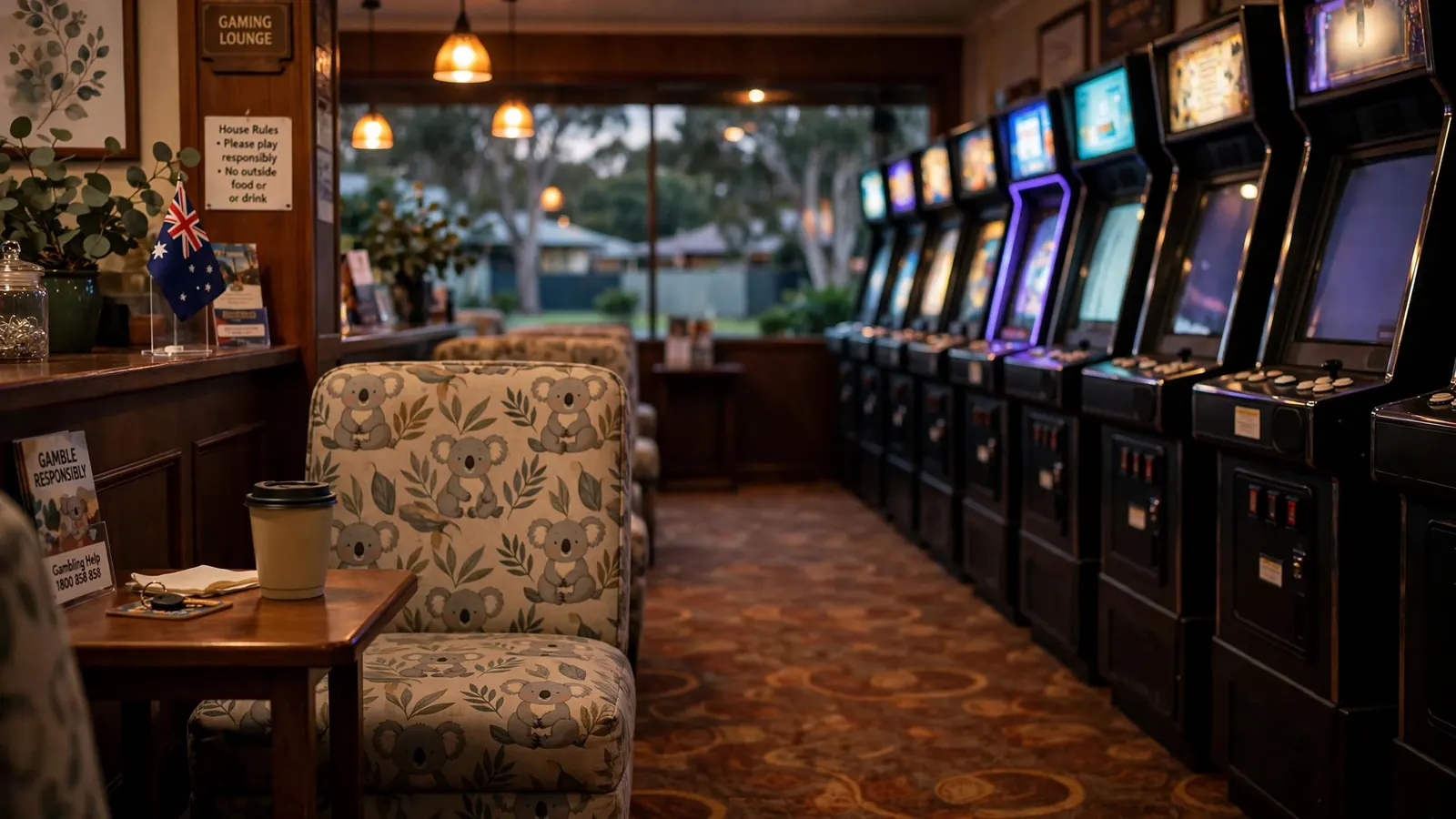
For users, the consequence is uncertainty of access and limited recourse if a dispute arises with an unlicensed service. A deposit or account balance does not make a blocked website available again, and a change of address does not resolve the site’s legal position. Avoid sending money or identity documents to a service simply because a link still opens or because a message claims that access can be restored.
ACMA’s enforcement role is regulatory, not a customer-support service for offshore casino accounts. A block is an access measure, and a fine is an enforcement measure against an operator; neither guarantees that a user can recover funds or resolve an account dispute. Treat access problems as a reason to stop and verify the service, not as a prompt to seek alternate routes around a block.
What a Curacao casino licence does—and does not—establish
A Curacao casino licence is a claim about permission granted by an authority outside Australia. It is not evidence that a site is licensed in Australia, and it cannot by itself establish that the site may lawfully offer online casino games to people in Australia. The distinction is between the scope of an offshore licence and the rules that apply where you are located.
For an Australian reader, that limit matters because online slots and casino games such as blackjack are illegal to offer in Australia. A licence issued elsewhere does not change that position. The words “Curacao licensed” on a page, a logo in its footer or a number beside a licence label cannot turn an offshore authorisation into Australian authorisation.
A Curacao licence is an offshore authorisation; it does not grant permission to offer online casino games to people in Australia.
What a licence claim can tell you
If genuine and applicable, a licence can indicate that a named operator has permission under another jurisdiction’s framework to provide specified gambling services. But the claim needs to be tied to the actual business and service. A site’s trading name may differ from the legal entity named in a document; the domain you visit may also not appear in the displayed wording. Without establishing those connections, the label does not reliably identify who is responsible for the service.
The details matter because “a Curacao licence” is not a complete description of what is authorised. A reader would need to know which entity holds the authorisation, what activity it covers, and whether it applies to the website and service being presented. A badge alone does not answer those questions. Nor does a licence claim establish how a dispute would be handled, whether a particular promise is enforceable, or what remedies would be available to a customer in Australia.
Those are separate questions from whether a service is authorised to offer online casino games here. Even a licence that is authentic and relevant to the operator remains an offshore licence. It does not replace the Australian legal position or create local permission.
What it cannot establish for Australians
The key test is not whether a site uses the phrase “Curacao licensed casino”; it is whether the service may lawfully offer the relevant games to a person in Australia. For online casino games, the offshore licence claim does not establish that permission. Treating it as if it did collapses two different jurisdictions into one and gives the label a meaning it does not have.
This also means that licence status should not be used as a shortcut for judging the safety or quality of a site. A licence claim alone does not show that a customer will be able to recover funds, resolve a complaint, or obtain help under Australian consumer protections. Unlicensed gambling services lack consumer protections, and Australian laws may not assist if winnings are withheld. A displayed offshore licence should not be presented as a substitute for local rights or safeguards.
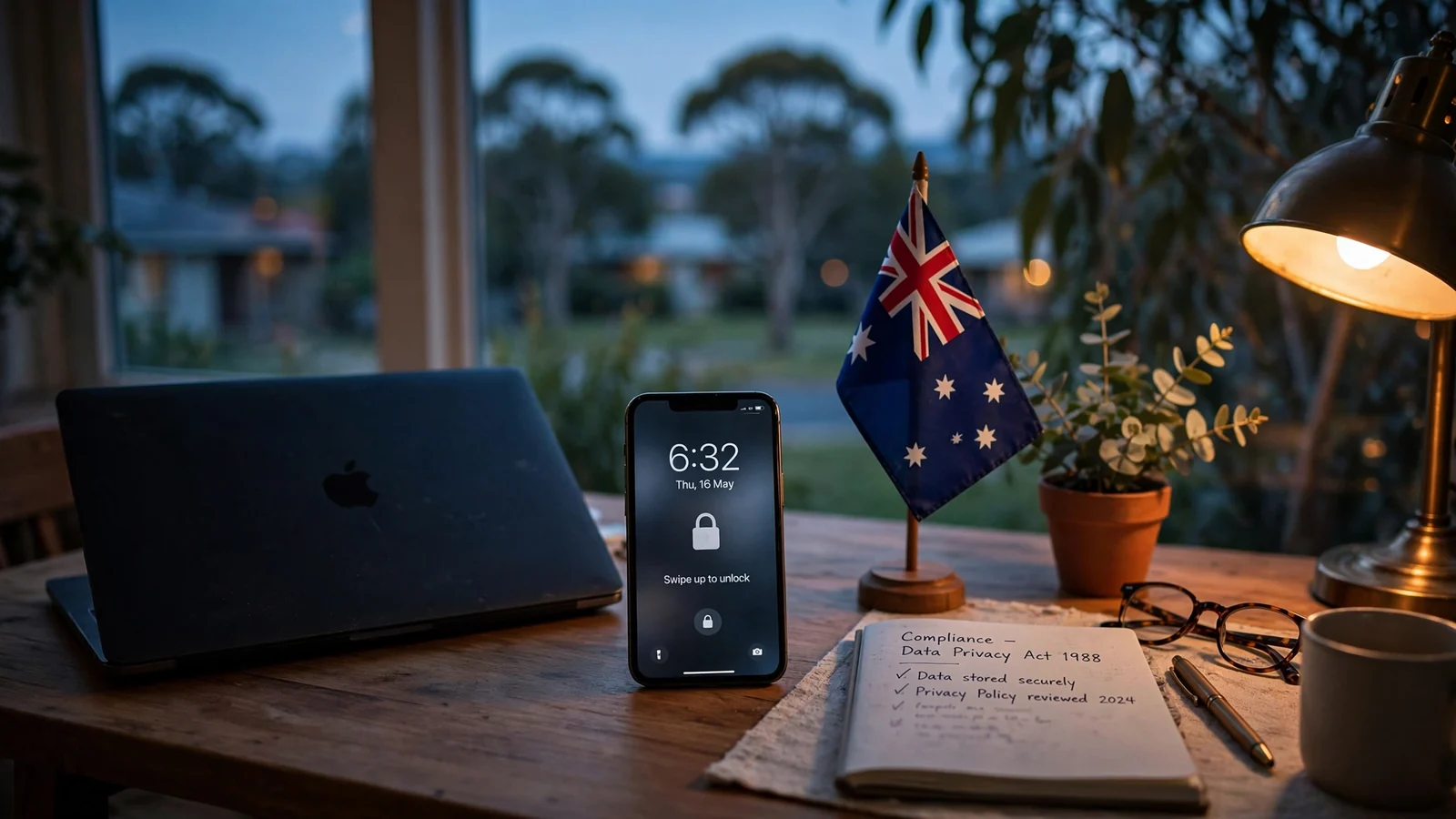
Do not try to get around access restrictions with a VPN. Using one to access a casino may result in voided winnings, account closure and loss of your deposit. A change to the apparent location of your connection does not change the rules that apply to the service or make an offshore licence an Australian one.
Read the claim narrowly
When you encounter a Curacao licence claim, treat it as a statement about the site’s asserted offshore status—not as proof that the site is licensed in Australia or permitted to provide casino games to Australians. The wording may describe a relationship with an overseas authority, but it cannot answer the separate Australian authorisation question.
That is the practical boundary: an offshore licence may describe permission in another jurisdiction, while Australian law determines whether online casino games may be offered to people here. The two statements are not interchangeable. A site can make a licensing claim, but that claim alone does not establish a lawful basis for serving Australian customers.
- Treat licence claims as statements of offshore status
- Distinguish between different jurisdictions
- Check for Australian authorisation
- Use an offshore licence as proof of local legality
- Use a licence badge as a safety shortcut
- Use a VPN to bypass access restrictions
How to check a casino site without relying on a ranking
A ranking can tell you how a page presents a service; it cannot establish whether that service is licensed in Australia. To check what ACMA recognises as a legal gambling product, use ACMA’s own public information and register rather than relying on a list assembled by a review site.
Start by identifying the exact service you are checking. Note the name shown on the site and, where available, the company operating it. Similar names can refer to different businesses, so a match based only on a brand name may not be enough to identify the service. Do not assume that a licence claim displayed on a site confirms Australian authorisation.
Then consult ACMA’s public register. Australians are encouraged to use it to check whether a wagering service holds a valid Australian licence. ACMA also directs players to its website and the national register for information about legal gambling products available in the market. Read the register entry itself and check that it relates to the service you are assessing, rather than treating a search result or a third-party summary as confirmation.
The type of service matters. The register’s role in confirming a licence for a wagering service does not mean that an online casino is licensed in Australia. Online casino games, including slots and blackjack, are prohibited when offered to people in Australia. A result for a wagering service therefore cannot be used to infer that the same operator may offer casino games, or that a separate casino-branded site is authorised.
Apply the same distinction to a Curacao licence claim. It may describe a licence issued elsewhere, but it does not establish that the service is licensed in Australia. A directory of Curacao-licensed sites, a badge on an operator’s page or a high position in a ranking is not a substitute for ACMA’s Australian register. Nor should the presence of a company name in a register be stretched to cover services or products that the entry does not identify.
If you cannot match the service to an appropriate entry, do not treat that uncertainty as approval. A foreign licence claim alone does not provide Australian authorisation. Unlicensed gambling services lack Australian consumer protections, and Australian laws may not assist you if winnings are withheld. Using a VPN to access a casino may also lead to voided winnings, account closure and loss of your deposit; it does not change the service’s legal position.
This check is about status, not quality. A ranking may compare presentation or features, but it cannot turn a prohibited online casino into a service licensed in Australia. Use ACMA’s public information to establish what is recognised in the Australian market, and keep that conclusion limited to the service and product the register actually covers.
What ACMA’s blocking figures show about access
ACMA’s published figures show that offshore gambling websites do not necessarily remain reachable from Australia. Since the authority made its first blocking request in November 2019, it has reported action affecting 1,369 illegal gambling and affiliate websites. That total indicates the scale of enforcement over time; it does not mean every site was blocked at once or that every site offered casino games.
1,369 illegal gambling and affiliate websites affected by ACMA since November 2019.
Approximately 1,011 illegal gambling and affiliate websites have been blocked.
1,154 illegal gaming and affiliate websites restricted via blocking-order requests.
Other reported totals describe blocking outcomes using different terms. ACMA has said that about 1,011 illegal gambling and affiliate websites have been blocked since that first request. It has also reported that blocking-order requests have permanently restricted access to 1,154 illegal gaming and affiliate websites since 2019. These numbers should not be treated as interchangeable: one describes websites affected by ACMA action, another refers to sites blocked, and the third describes permanent access restrictions associated with blocking-order requests. The figures show sustained enforcement, but do not identify the status of any particular site today.
For someone looking at an offshore casino, including one that claims a Curacao licence, the practical point is that a website’s availability can change. A page that loads at one time may later be inaccessible to Australian users. A functioning site is not, by itself, evidence that it is authorised to offer online casino games in Australia; likewise, a block is an access measure, not a ruling about the quality of a site’s games or its payment processes.
The figures also include affiliate websites, not only gambling services. An affiliate site may direct visitors towards gambling services without itself operating a casino. As a result, the combined totals cannot be read as the number of offshore casinos, Curacao casinos, or casino operators that have been blocked. They indicate the reach of ACMA’s activity across illegal gambling-related websites and affiliates.
A separate indicator is the number of services that have left the Australian market voluntarily. Around 220 illegal services exited after stricter online gambling rules were enforced in 2017. That is different from a website becoming inaccessible following a blocking measure: an exit is a service’s withdrawal from the market, while a block concerns access to a website. The two figures describe different ways the Australian market has changed, and should not be added together as though they counted the same event or the same set of services.
Taken together, the reports show that enforcement has operated over several years and has involved both blocked websites and services that chose to withdraw. They do not establish that every offshore service has been detected, that every blocked site was a casino, or that a service not included in a reported total is permitted to serve Australians. Nor do historical totals predict whether a particular casino Curacao page will load in the future. The figures are a measure of past enforcement activity, not a live directory of sites or a guarantee of ongoing access.
If you use a VPN to try to reach a blocked gambling site, you may face consequences under that site’s own terms, including voided winnings, account closure, or loss of your deposit. A VPN does not change the legal status of the service. Offshore gambling services that are not authorised for Australians also lack Australian consumer protections, and Australian law may not assist you if a service withholds winnings.
The totals therefore matter most as context: offshore access is not fixed, and enforcement has continued since ACMA’s first blocking request. A search result, a site’s own licence claim, or the fact that a page is currently reachable cannot substitute for determining whether the service is authorised for Australian customers.
Enforcement Context
- ACMA enforcement is sustained and involves both blocks and voluntary exits
- Website availability is not evidence of legal authorisation
- VPNs do not change the legal status of a service or provide consumer protection
- Offshore access is not fixed and can change at any time
Responsible-gambling protections and their limits
Responsible-gambling tools are safeguards, not evidence that an online casino is authorised to serve people in Australia. The distinction matters when assessing a site associated with a Curaçao licence: a foreign licence does not make its casino games lawful to offer to Australians.
Under the Interactive Gambling Act 2001, operators that are licensed and permitted to provide gambling services must meet responsible-gambling requirements. But online casino games remain prohibited for Australian customers. A site’s description of its policies, or the presence of a licence from elsewhere, does not change that position.
Deposit limits are one type of harm-reduction measure. They let a player set a ceiling on deposits over a chosen period, such as daily, weekly or monthly, so the account can prevent further deposits once the selected threshold is reached. A specialist review has described these settings at online casinos, but that account should not be treated as proof that they are consistently available, effective or current across sites. The terms of a particular service can also determine how a setting works.
Support information is another relevant safeguard. Reputable gambling platforms provide information about gambling-related harm and direct people to professional support services in Australia. Check whether that information is accessible and clear; its presence can help you find support, but it does not establish that the platform is allowed to offer casino games here.
These tools have limits. A deposit setting cannot establish that an operator is licensed in Australia, and support links do not replace professional assistance or resolve the legal status of an offshore service. Offshore gambling services may lack Australian consumer protections, and Australian laws may not assist you if a site withholds winnings. Do not treat a responsible-gambling page as a substitute for checking the service’s status through ACMA.
Avoid using a VPN to reach an online casino. Accessing a site that way may lead to your account being closed, winnings being voided and your deposit being lost. Those risks are separate from whether the site displays deposit controls or links to support.
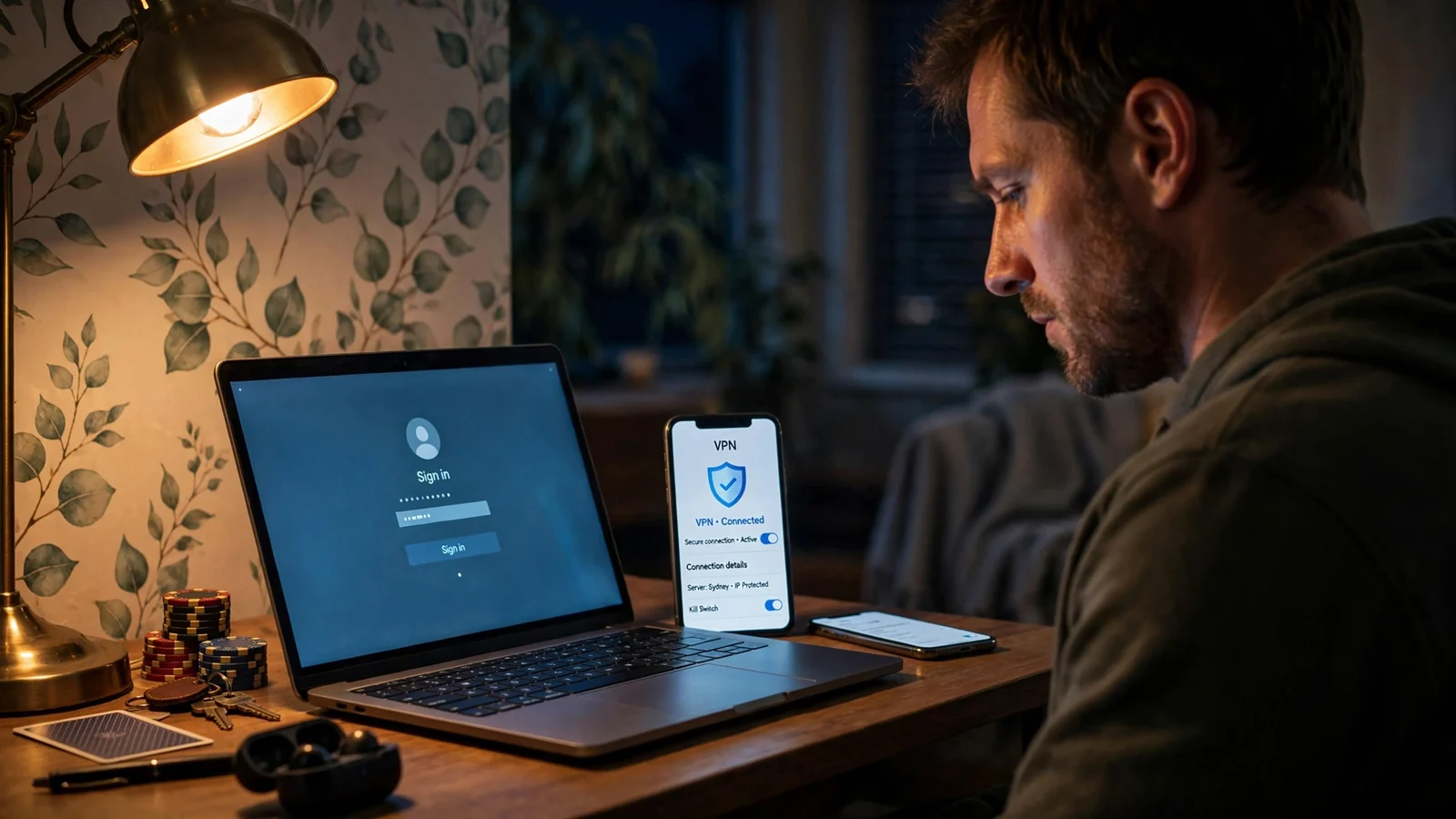
For a practical check, distinguish three things: what harm-related information the site provides, what account controls it describes, and whether it is authorised to offer the service to Australians. The first two may indicate safeguards; they cannot establish the third.
Security checks: encryption, identity and withdrawals
Security checks answer a limited question: how a site handles data and verifies account ownership. They do not, by themselves, establish that a casino is safe to use or authorised to serve people in Australia. A Curacao connection or licence claim cannot substitute for checking what protections apply to you.
Casinos use SSL encryption to protect information sent between your device and the site, including transaction details and sensitive account data. Encryption helps reduce the risk of that information being read while it is transmitted. It does not show how the operator stores data, who can access it, or how a dispute will be handled. Nor does an encrypted connection prove that a site is genuine or that a withdrawal will be paid. Treat encryption as one part of a technical check, not a guarantee of overall security.
Attention SSL encryption protects data during transmission but does not guarantee a site’s legitimacy or that withdrawals will be paid.
KYC means “know your customer”: the operator checks that the person using an account is the person who opened it. Identity checks are required before withdrawals. You may be asked for photo identification, proof of your residential address, and evidence that you own the payment method used. The operator uses these documents to compare the account details with the identity and payment information on file.
Before sending documents, check that you are using the site’s actual account-verification channel and understand how the information will be handled. Do not send identity documents through an unsolicited message or to an address you cannot verify. Keep copies of what you submit and note any instructions the operator gives about image quality or accepted documents; requirements can differ between services.
A request for documents can delay a withdrawal while checks are pending, but completing KYC is not proof that a withdrawal will be approved. If the account name, address or payment ownership details do not match, the operator may ask for clarification. Read the site’s terms on verification and withdrawals before providing information, and retain the records of your account and communications.

These checks do not create Australian consumer protections. An unlicensed gambling service lacks those protections, and Australian law may not assist you if winnings are withheld. Using a VPN to reach a casino may also lead to voided winnings, account closure or loss of your deposit. Encryption and identity verification can describe parts of a site’s process; neither resolves those risks.
Crypto payments do not change the legal position
Using cryptocurrency to fund an online casino account does not change the rules governing the gambling service. The Interactive Gambling Act 2001 concerns the provision of online casino games to people in Australia; it does not make the legal position depend on whether a payment is made with cryptocurrency, a bank transfer or another method. A crypto payment therefore does not make an otherwise prohibited online casino service lawful for Australian customers.
This distinction matters when a site promotes itself as a Curacao crypto casino or appears in a list of casinos associated with Curacao. The payment option and the location or licensing claim are separate from the question of whether the service may offer real-money casino games to people in Australia. Neither the use of digital assets nor a payment confirmation answers that question.
The Act does not explicitly criminalise individual players for using offshore casino sites. That does not mean the service is authorised in Australia, or that using it carries the same protections as using a service licensed in Australia. If a site blocks access, closes an account or withholds winnings, you should not assume Australian law will provide a practical remedy. Offshore services may lack the consumer protections available through locally authorised services.
A VPN does not alter the service’s legal status either. Using one to reach a casino may lead to winnings being voided, an account being closed or a deposit being lost. It can also make it harder to establish where you were accessing the service from. Changing your connection route is not the same as changing the rules that apply to the operator.
Do not treat a cryptocurrency option as evidence that a site is suitable for Australian players. It describes a way to transfer value, not permission to provide online casino games in Australia. The same distinction applies whether you encounter a Curacao-branded casino, a crypto-focused site or a broader list of offshore gambling services. Payment method, access method and legal authorisation are different questions; resolving one does not resolve the others.
Cryptocurrency payments do not make a prohibited online casino service lawful for Australian customers.
What to verify before considering a newly launched site
A recently launched casino website can present the same claims as an established one, but its age does not confirm that those claims are accurate. Treat “new” as a reason to verify details, not as evidence of safety, quality or legal status.
Start by checking what service the site actually offers and who it says operates it. Read the terms for the operator’s legal name, the rules governing accounts and withdrawals, and any stated licence details. These are claims to examine, not proof that the service is authorised to offer online casino games to people in Australia. An offshore licence does not amount to being licensed in Australia.
Check whether the site’s name or address appears in ACMA’s public information about gambling services. A result can help you understand the service’s status, but a site not appearing on a list should not be treated as approval. Website addresses and operators can change, so compare the exact domain and company details rather than relying on a familiar logo or copied wording.
Pay attention to whether key terms are available before registration. If the operator, licence claim, payment conditions or withdrawal rules are unclear or inconsistent, you cannot reliably assess what would happen to an account or funds. Do not supply identity or payment information merely to resolve uncertainty; those details should be considered only after you have independently established what service you are dealing with.
A new site may have little publicly observable history, so testimonials or polished design cannot fill gaps in verifiable information. Avoid treating a launch announcement, a licence badge, or a claim of Australian availability as confirmation. For Australian readers, the central check remains whether the service is permitted to provide online casino games here; being newly launched does not alter that question.

Online casinos in Curacao: what this page can establish
A question about casinos in Curacao can mean two different things: whether gambling venues operate physically on the island, or whether an online gambling service is associated with Curacao. Those are separate questions. A reference to Curacao in an online casino’s name or licensing claim does not, by itself, establish that a land-based casino exists there.
The location of a venue and the location or licensing of an online service are not interchangeable. A land-based casino is a physical place; an online casino is a service delivered through a website or app. Evidence about an online service cannot establish the presence, number or operating status of physical venues on the island. Conversely, the existence of a physical venue would not show that an online service may offer casino games to people in Australia.
For Australian readers, the relevant distinction is whether an online operator may provide the service to customers here. Under the Interactive Gambling Act 2001, operators may not offer real-money online casino games to people physically located in Australia. A Curacao connection does not change that Australian rule or make an online casino licensed in Australia.
So, if you are asking whether Curacao has physical casinos, do not treat an offshore online licence or a website’s description as an answer. That claim needs evidence about land-based venues themselves. If you are asking about an online casino serving Australians, focus on the service and its status under Australian law; the island’s physical casino scene is a different matter.

This distinction also prevents a common category error: an online operator may refer to a jurisdiction without being a place you can visit, while a physical venue is not automatically connected to a particular website. A location label alone cannot establish either fact. Keep the two questions separate, and do not infer one answer from information that addresses only the other.
What are the legal consequences for Australian players using offshore casinos?
Using an offshore casino is not explicitly a criminal offence for an individual player under the Interactive Gambling Act 2001. However, the Act prohibits operators from offering online casino games to people in Australia, and ACMA can block sites or fine operators.
How long should a withdrawal take from a secure casino?
After approval, PayID and some e-wallet withdrawals can arrive quickly, while bank transfers and card withdrawals may take several business days. Verification can be required before a withdrawal is processed.
Which banking methods are available for deposits and withdrawals?
Methods mentioned include PayID, e-wallets, bank transfers and cards. POLi is mainly for deposits, and card withdrawals may be slower or unavailable.
What documents might be needed for verification?
You may be asked for photo identification, proof of address and proof that you own the payment method used.
Prepared by the Levelupcasinoinfoau.com editorial staff.