
Real Money Casino Table Games in Australia: How They Work
 Available in AU
Compare software-generated and live-dealer formats, and see what the available facts can—and cannot—establish about odds.

Table of Contents
- How Online Table Games Work
- What Bitcoin Changes—and What It Does Not
- What the Available Facts Can—and Cannot—Say About Odds
- What Happens When You Play a Table Game Online
- Finding a Nearby Venue Is a Separate Question
- What Counts as a Casino Table Game
- How Table-Game Formats Differ
- Card Games: Dealing, Betting, and Hand Building
- Roulette Outcomes and Wheel Variants
- Poker’s Player-versus-Player Objective
How Online Table Games Work
An online table game can be generated by software or presented through a live video stream. The difference is in how the game’s outcome is produced: a software version uses a random number generator (RNG), while a live-dealer version shows a real dealer using casino equipment. Both are digital ways of presenting a table game, but the source of the cards or other outcomes differs.
Software-generated games
In an RNG-based game, software determines the outcome. For a card game, the RNG determines which cards you are dealt. In online roulette, it determines where the ball lands. The result is generated by the game software rather than captured from a physical table in a live broadcast.
That distinction matters because the visual presentation is not the mechanism that decides the result. A digital card image represents the card selected by the RNG; a roulette animation represents the selected landing place. The animation or graphics display an outcome, but the stated mechanism behind that outcome is the random-number generator.
When you’re choosing a real-money casino for table games in Australia in 2026, it helps to check the available licensing details and any stated entry requirements. Use these short verdicts as a factual reference before deciding what to explore further.
License: Curacao eGaming OGL/2024/923/0383 (Antillephone N.V.) · Min. deposit: A$30 WinSpirit Casino lists a Curaçao eGaming licence, OGL/2024/923/0383, issued through Antillephone N.V. Its stated minimum deposit is A$30.
License: Curacao Gaming Authority (Jumpman Gaming Ltd) DragonSlots Casino lists a licence from the Curaçao Gaming Authority, with Jumpman Gaming Ltd named. You can use that licensing detail as a starting point for your checks.
License: Curacao (operating since 2017) · Min. deposit: A$20 Uptown Pokies is listed as operating since 2017 under a Curaçao licence. Its stated minimum deposit is A$20.
License: Curacao Gaming Control Board (TechSolutions Group N.V.) Bizzo Casino lists a Curaçao Gaming Control Board licence, with TechSolutions Group N.V. named. You can refer to those details when assessing the operator.
License: Curacao Gaming Control Board OGL/2023/176/0095 (Hollycorn N.V.) Rollero Casino lists Curaçao Gaming Control Board licence OGL/2023/176/0095, held by Hollycorn N.V. That licence reference is the main stated detail to consider.
License: Curacao Gaming Control Board OGL/2023/174/0082 (Dama N.V.) SpinsUp lists Curaçao Gaming Control Board licence OGL/2023/174/0082, held by Dama N.V. You can use the licence information as a point of reference.
License: Curacao eGaming (Dama N.V.) JeetCity Casino lists a Curaçao eGaming licence, with Dama N.V. named. The supplied information identifies its licensing, but gives no further operator details.
License: Curacao Gaming Control Board OGL/2023/176/0095 (Hollycorn N.V.) LuckyVibe lists Curaçao Gaming Control Board licence OGL/2023/176/0095, held by Hollycorn N.V. Its stated credentials are limited to this licensing information.
License: Curacao eGaming (Roby Games Ltd) Roby Casino lists a Curaçao eGaming licence, with Roby Games Ltd named. You can take this as the key available fact when considering the operator.
License: Curacao Gaming Control Board JustCasino lists a Curaçao Gaming Control Board licence. No licence holder or other operator details are specified in the information provided.
The term “random” describes how the software selects outcomes; it does not mean that an outcome is chosen by a dealer on camera. Nor does a digital representation turn the game into a live table. To identify the format, focus on whether the result comes from software or from a real dealer and equipment shown in a stream.
Live-dealer games
A live-dealer game uses a real dealer and real casino equipment. Video of the game is streamed to players, so the displayed activity comes from a physical setup rather than a software-generated depiction of a table. The dealer and equipment are part of the live presentation; the stream carries that presentation to the viewer.
This does not make the game a software RNG version simply because you access it online. The defining feature is the real dealer and equipment shown in the live video. Conversely, realistic graphics alone do not establish that a game is live: an RNG-based game can depict a table or dealer without using a live stream.
The two formats therefore differ in the origin of the outcome and in what the screen shows. In a software version, the RNG determines the relevant cards or roulette result. In a live-dealer version, the video shows a real dealer using casino equipment. A screen may make either format look like a table game, so appearance by itself is not a reliable way to distinguish them.

How to read the format
When you encounter a description of an online table game, look for a clear indication of whether it is live streamed or software based. “Live dealer” refers to the real dealer, real equipment and streamed video. An online software version uses an RNG to determine outcomes such as dealt cards or the roulette ball’s landing place. These descriptions explain how the game is produced; they do not establish that a service is lawful to access in Australia.
That legal distinction is important. The Interactive Gambling Act 2001 prohibits operators from providing real-money online casino games, including table games, to people located in Australia. The Australian Communications and Media Authority enforces the law and blocks unlicensed platforms. The fact that a game is hosted online, streamed live or generated by software does not change that restriction.
So, “online table game” describes a delivery format, not a permission to offer or use the service. A live stream remains a casino game when it shows a dealer and equipment; an RNG game remains a casino game when software selects its outcomes. Neither technical format overrides the Australian legal framework.
It is useful to keep these categories separate when reading about table games. The first question is how the outcome is produced: by an RNG or through the activity shown in a live stream. The second is what the interface displays, which may be a digital representation or a video feed. The third is whether the service may legally be provided to someone in Australia. Treating these as separate questions avoids confusing a game’s mechanism with its appearance or legal status.
Legal Restriction
The Interactive Gambling Act 2001 prohibits operators from providing real-money online casino games to people located in Australia.
What Bitcoin Changes—and What It Does Not
Bitcoin and a table game belong to different parts of an online service. Bitcoin is a payment method; it does not, by itself, define the rules of a game or how its outcomes are generated. For an online game, the outcome mechanism is a separate matter: a random number generator can determine which cards are dealt or where a roulette ball lands. The payment method and that mechanism should not be treated as the same feature.
This distinction matters when comparing Bitcoin table games with games described as “normal” casino table games. The label attached to the payment option cannot establish that the game uses different rules, has different odds, or handles cards and roulette outcomes differently. Those questions concern the game itself. A claim that a Bitcoin version is faster, fairer, more private, or otherwise distinct would need evidence about the relevant service and its operation; the currency alone does not prove it.
The same separation applies when you are trying to identify the “best” option. Bitcoin support is not a measure of game quality, and the payment label does not tell you which table games are available or how they work. Nor does it establish that a particular game has better odds. To compare a game’s mechanics, you need information about the game; to assess a payment arrangement, you need information about the payment process. One category cannot stand in for the other.

It is also possible for a game’s outcome process and the transfer of funds to be discussed in the same description, which can make them seem like one system. They are not interchangeable. The random number generator is concerned with determining a game outcome. Bitcoin, when used as a payment method, concerns transferring value. Nothing about the word “Bitcoin” tells you what random process is used, and nothing about an RNG tells you which payment method a service accepts.
This means that searches for Bitcoin table games do not, on their own, answer practical questions such as whether a particular game is offered, whether it is available at a given time, or how a deposit or withdrawal is handled. Those are service-specific details, not consequences that follow automatically from using Bitcoin. A general description of online table-game mechanics cannot verify a particular platform’s features, and a payment claim does not confirm how a game produces its outcome.
There is also a legal boundary in Australia. The Interactive Gambling Act 2001 prohibits operators from providing real-money online casino games to people physically located in the country. That restriction concerns the provision of the gambling service; describing Bitcoin as a payment method does not change it. A payment option should not be read as an exception to the law or as evidence that an online casino service may lawfully be offered to Australian residents.
So, when you encounter a Bitcoin-related claim about table games, keep the questions separate: what determines the game outcome, what payment method is being discussed, and whether the service may legally be provided in Australia. The first concerns game mechanics, the second concerns a transfer of value, and the third concerns the legal status of the service. None can be answered merely by attaching “Bitcoin” to the name of a table game.
- Treat Bitcoin as a payment method
- Assess game quality based on game mechanics
- Separate payment processes from game outcomes
- Assume Bitcoin defines game rules or odds
- Use payment labels to measure game quality
- View Bitcoin support as a legal exception in Australia
What the Available Facts Can—and Cannot—Say About Odds
A ranking of casino table games by odds needs comparable figures for those games. A return percentage alone would not be enough unless it applied to the same kind of play and measured the same thing. The Return to Player (RTP) figure is defined for pokies: it describes a theoretical share of stakes returned across millions of spins. It is a long-run measure, not a prediction of what a particular player will receive.
That distinction matters when you are looking for table games with the best odds. A pokie RTP cannot tell you whether one table game is more favourable than another, and it cannot be used to make a house-edge chart for table games. The calculation refers to spins, while a table-game comparison would need figures tied to the rules and outcomes of the particular game. Treating the two as interchangeable would create a ranking without a sound basis.
“Odds” can also refer to different things. It may mean the chance that a particular outcome occurs, the terms attached to a wager, or the difference between a game’s expected return and the amount staked. Those measures are related, but they are not identical. A comparison is meaningful only when it specifies which measure it uses and the conditions under which it was calculated. Without that, labels such as “best odds” or “worst odds” do not explain what is being compared.

RTP is theoretical because it describes results over a very large number of spins. Individual results can differ from that long-run expectation. It does not tell you what will happen in a particular session, nor does it provide a reliable way to identify a favourable moment to play. A short run of results is not enough to establish a game’s long-term return.
For table games, a useful odds comparison would need game-specific information: the relevant rules, the possible outcomes, how wagers are settled, and the calculation method behind any quoted return or house edge. A figure without its assumptions can be misleading. Even figures that use the same label may not be directly comparable if they describe different bets or rule sets.
This is why a general list of the best casino table games by odds cannot be inferred from a pokie RTP definition. Nor can that definition identify which table games have the worst odds. It supports a narrower conclusion: RTP is a theoretical long-run return measure for pokies, expressed across millions of spins. It does not supply a table-game ranking, a table-game return rate, or the values needed to construct a house-edge chart.
When you encounter an odds claim about a table game, check what it measures and what rules it assumes before treating it as a comparison. A percentage or chart is useful only when its meaning and scope are clear; the word “odds” on its own is not enough to show that one game offers a better expected return than another.
RTP Definition
Return to Player (RTP) is a theoretical long-run return measure for pokies, expressed across millions of spins, and cannot be used to rank table games.
What Happens When You Play a Table Game Online
An online table game can present its action in two different ways. In a live-dealer format, a real dealer works with casino equipment, and a video stream carries the session to viewers. In an automated version, there is no streamed dealer determining the displayed result: a Random Number Generator (RNG) selects the cards dealt or, for roulette, the wheel position where the ball lands.
That difference changes what you see, not the basic distinction between a game’s rules and its result. A live stream shows a physical dealing or roulette process as it happens. An RNG-based version presents a digital result determined by software. In either case, the game’s format tells you how the outcome is produced; it does not, by itself, explain the rules for interpreting that outcome.
For a streamed game, the dealer and equipment are visible through video. You watch the real-world action rather than a software animation standing in for it. For an RNG-based game, the screen shows the result produced by the generator. The cards or roulette position are still presented as part of the game, but the result is determined electronically rather than by a dealer physically handling cards or a wheel.
Blackjack gives a straightforward example of a hand-versus-dealer objective. You compete with the dealer by seeking a hand whose value is closer to 21. The comparison is between your hand and the dealer’s: the aim is not simply to collect cards or to make the largest possible total without regard to the target. The value of the hand determines how it measures against the objective.
The online format does not change that central comparison. Whether the cards are dealt in a live stream or selected by an RNG, the relevant question remains how the value of your hand compares with the dealer’s. The difference lies in how the deal is generated and presented, not in the stated aim of the game.
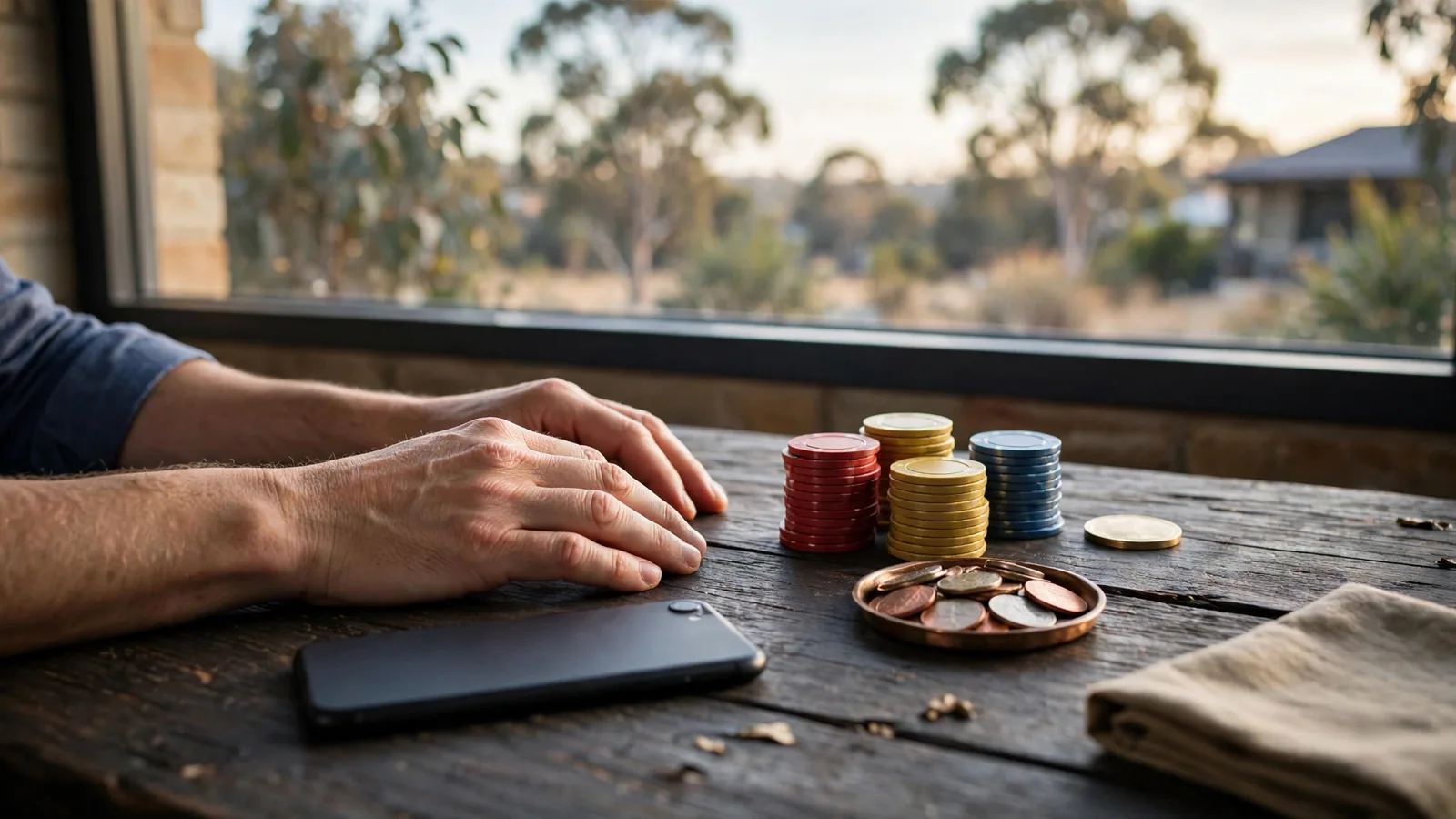
If you are learning how a table game works, separate three things: the display, the mechanism that determines an outcome, and the rule that gives the outcome meaning. A streamed dealer is part of the display and physical process. An RNG is the mechanism used in an automated version. The game’s objective tells you what the resulting cards or wheel position mean within that game. Treating these as separate parts makes it easier to understand what the screen is showing without confusing a visual presentation with a rule.
In Australia, the Interactive Gambling Act 2001 prohibits operators from providing real-money online casino games to people located in the country. The mechanics above are an explanation of how the formats are structured, not an invitation to access or play a real-money service.
Finding a Nearby Venue Is a Separate Question
A nearby casino is a question of physical geography: it depends on where you are and where venues are located. Online table games are different. They are accessed through a service rather than by travelling to a building, so describing an online game does not identify a venue or establish which one is closest to you.
The distinction matters when you are looking for a place to play a particular kind of table game. A venue’s location and the games it offers are separate details; knowing how a game works online does not tell you whether a nearby physical venue has it. Location-based results can also vary with the area being searched. A result for Miami or Ohio, for example, would concern a different jurisdiction and would not establish what is available near someone in Australia.
Australia’s rules also make it important not to treat online and in-person gambling as interchangeable. Under Section 5 of the Interactive Gambling Act, operators based in Australia are prohibited from offering residents real-money interactive casino games. That restriction concerns the provision of online casino services; it is not a directory of physical venues and does not answer a question about distance.
For an online table game, “near me” does not describe a physical distance to a dealer or table. The game is presented through an online service, while the legal framework concerns whether that kind of service may be offered to people in Australia. For a physical venue, by contrast, the relevant facts are its address, your starting point, and the route between them. Those are different questions and need different information.
This also explains why a list of online game mechanics cannot serve as a guide to local casinos. A description of a dealer-versus-player hand, a wager on an outcome, or a dice game tells you about the structure of play, not where a venue is or what it provides on site. Likewise, a venue’s proximity would not establish that an online casino service is permitted.
Keep the two meanings separate when assessing information: venue details describe a place, while online casino rules describe services delivered over the internet. The Interactive Gambling Act sets the relevant restriction for Australian-based operators offering real-money interactive casino games to residents. Distance, game format and online legality are not substitutes for one another; each requires its own answer.
What Counts as a Casino Table Game
A casino table game is defined by how its play is organised, not simply by the screen or physical surface on which it appears. The central mechanic is a shared game structure in which participants make decisions or place bets under stated rules. Depending on the format, you may compete against a dealer, stake a bet on an outcome, or compete with other players to form a hand.
In a dealer-versus-player game, the dealer’s hand provides the comparison point. The player’s objective is to finish with a hand value closer to 21 than the dealer’s. The defining feature is not just that cards are involved: it is that the result is judged by comparing the player’s hand with the dealer’s. A game in which players instead compare hands with each other has a different competitive structure, even if it also uses cards.
Participants compete against a dealer, seeking a hand value closer to a target (e.g., 21) than the dealer’s hand.
Players place bets on specific results, such as their own hand, the Banker’s hand, or a tie.
Participants compete against each other to build the strongest possible hand.
Another format centres on bets about which result will occur. A player may bet on their own hand, the Banker’s hand, or a tie. Here, the bet identifies the outcome that matters to that player; it does not necessarily mean the player is controlling or building the hand they have backed. This distinction helps separate betting on a result from competing directly to produce the strongest hand.
Some table games use dice rather than cards. Players roll a pair of dice and bet on the outcome. The dice determine the event on which the bets depend, while the player’s role is to select an outcome and stake a wager rather than construct a hand. The presence of a table is therefore not enough to define the format: the relevant question is what generates the result and what the player does in response.
In a player-versus-player hand game, participants try to build the best possible hand. The contest is between the players’ hands, rather than between each player and a dealer’s hand. The hand-building objective is what distinguishes this structure from a bet placed on a dealer’s result or on a tie.
These mechanics give you a practical definition of casino table games without requiring a catalogue of titles. Ask three things: who or what is being compared, whether the player builds a hand or selects an outcome, and what determines the result. A game can involve a dealer without making the dealer the opponent; it can involve cards without asking players to build a hand; and it can use dice while still depending on bets. The answers identify the game’s basic structure more clearly than the label “table game” alone.

How Table-Game Formats Differ
Table games differ in what you act against and what your wager refers to. In one format, you compare a hand with a dealer’s. In another, you choose which hand or outcome to back. Dice games make the roll itself the focus, while poker centres on players forming hands against one another. These mechanics are useful for distinguishing formats; they do not establish which games a particular service offers.
A hand against the dealer
In blackjack, your hand is measured against the dealer’s. The objective is to finish with a value closer to 21 than the dealer’s hand. The comparison is direct: your result is evaluated in relation to the dealer, rather than against other players’ hands. A player’s choices concern their own hand, while the dealer provides the opposing hand.
Wagering on a hand or a tie
Some table-game formats let you place a bet on one of several outcomes: your hand, the Banker’s hand, or a tie. Here, the central distinction is what your wager predicts. You are not necessarily trying to build a hand that beats the dealer through your own decisions; instead, you select which listed outcome you think will occur. The bet’s target is therefore part of the format’s basic structure.
Dice-based outcomes
In dice games, players roll a pair of dice and bet on the outcome. The result is determined by the roll rather than by comparing card hands.
Betting on dice
A dice-based table game uses a different source of outcomes. Players roll a pair of dice and bet on what the roll will produce. The result comes from the dice rather than from comparing card hands. To understand this format, focus on the relationship between the wager and the possible dice outcome: the roll determines which prediction is borne out.
Building a hand against other players
Poker shifts the contest from dealer-versus-player to player-versus-player. Participants aim to build the best possible poker hand, so the relevant comparison is among players’ hands. This is different from betting on a named hand or tie: the players are competing to produce the strongest hand, rather than simply choosing which outcome will occur.
These categories describe mechanics, not a ranking of games. A format based on a dealer comparison, a selected outcome, a dice roll, or competing hands asks you to understand a different relationship between the wager and the result. The term “live” does not identify that relationship by itself; the game’s rules determine what is being compared or predicted.
For readers in Australia, the legal setting also matters: operators may not provide real-money online casino table games to people physically located in the country. The mechanical distinctions above are descriptive, not a recommendation to access such services.
Card Games: Dealing, Betting, and Hand Building
Card table games do not all ask you to do the same thing with a hand. In one format, you try to finish closer to a target than the dealer. In another, you place a wager on which hand will prevail—or whether the hands will tie. Poker instead centres on building the strongest hand in competition with other players. These differences affect what your wager refers to and what counts as success.
In blackjack, your objective is to have a hand value closer to 21 than the dealer’s. The comparison is between your hand and the dealer’s, rather than between your hand and every other player’s. A useful way to understand the format is to separate the target from the opponent: 21 is the reference value, while the dealer’s hand is the one you are trying to beat in closeness to that value.

Some card-game wagering is organised around predicted outcomes. You may be able to wager on your hand, the Banker’s hand, or a tie. Here, the decision is not simply about building your own strongest hand; it is about which result your bet names. That distinction matters when comparing formats: one asks you to pursue a hand objective, while another lets you select an outcome for the wager.
Poker uses a different competitive structure. Players try to build the best possible hand against one another. The central task is hand construction, and the comparison is player against player—not player against dealer. This gives poker a distinct objective from a dealer-based game, even though both involve cards and hands.
These mechanics are enough to distinguish broad types of casino card games without assuming that every game follows the same dealing procedure or offers the same betting choices. The name of a game alone does not tell you what your wager applies to; identify the opponent or outcome being compared, then identify the hand objective.
There is an important Australian legal boundary around real-money play. The Interactive Gambling Act 2001 prohibits operators from providing online casino-style games, including card games, to people located in Australia. That legal rule concerns the service being provided; it does not change the mechanics described above.
Roulette Outcomes and Wheel Variants
Roulette outcomes are organised around numbered pockets on a wheel. In an online version, a random number generator determines the pocket where the ball lands. The wheel’s variant matters because it determines which green zero pockets are part of that set of possible outcomes.
European and French roulette each have 36 numbered pockets and a green zero. American roulette has a green zero and a double zero, marked 00. That difference is visible in the wheel layout: the American version includes an additional green pocket. The variants therefore do not have identical sets of wheel outcomes.
When you compare roulette formats, start by identifying the wheel rather than relying on the game’s name alone. European and French roulette share the stated number of numbered pockets and the single green zero. American roulette is distinguished by its additional 00 pocket. These are structural differences in the wheel, not different ways of dealing cards or building a hand.
The distinction also applies to online roulette. A digital game may represent the wheel on screen, but its outcome is determined by an RNG; the relevant variant still tells you which pockets belong to that wheel. In a live presentation, the displayed wheel and ball provide the visible result. In either case, the outcome is the pocket selected for that spin.
These details are useful when reading a game’s rules or identifying which version is being presented. The label “roulette” alone does not tell you whether the wheel has one green zero or both 0 and 00. Check the displayed wheel or the game description for the variant. European and French roulette have a single green zero; American roulette has two green pockets, 0 and 00. That is the key wheel-structure distinction.
Poker’s Player-versus-Player Objective
Poker’s defining aim is to build the strongest possible hand in competition with other players. The comparison is between players’ hands, rather than a player trying to get closer to a target against a dealer. That player-versus-player objective is what distinguishes poker at this level.
The broad description does not determine the rules of a particular poker game. It does not specify which cards are used, how hands are ranked, or how a round proceeds. Those details can vary by format, so the general objective alone is not enough to establish how a specific game works. Nor does it support claims about which poker formats a particular venue offers.
When you encounter a reference to casino poker, separate the game’s objective from the conditions under which it is offered. A poker game may involve players competing to make the best hand, but that description does not establish that a real-money online version is legally available to people in Australia.
The Interactive Gambling Act 2001 prohibits operators from providing real-money online poker to people physically located in Australia. This applies to the service being offered, not to the basic meaning of poker’s player-versus-player objective. So the distinction is important: you can describe what the game is designed to do without implying that Australians may access an online casino poker service.
Specific names or labels do not change that underlying objective, and they should not be treated as proof of a particular ruleset or local offering. Without rules for a named format, the precise way its hands are formed and compared cannot be inferred. The reliable general point is narrower: poker centres on players trying to build the best possible hand against one another.
Published by the Levelupcasinoinfoau.com team.