Tasmania Casino Guide: Stays, Gaming and Dining
 Available in AU
The guide distinguishes rooms within a casino complex from nearby stays and outlines gaming, dining, events and other practical search questions.
Table of Contents
- Hotel Rooms and On-Site Stays
- Poker Rooms, Tournaments and Other Gaming Facilities
- Online Casino Searches and the Limits of Australian Access
- Accommodation Near the Casino
- Contact Details, Bars and Events
- Breakfast, Buffet Searches and Casino Jobs
- Opening Hours, Entertainment and Development
- Restaurants and Dining Searches
- Spa Searches, Address and Dress-Code Questions
- Food and Pool Searches
Hotel Rooms and On-Site Stays
A casino hotel combines two services at one address: accommodation and gaming. That arrangement can make an overnight visit easier to organise, but the label alone does not tell you what is included. A room may be in the same building as a casino, connected to it, or simply marketed alongside a separate venue. Those distinctions affect how much walking, transport and planning a stay requires.
For Tasmania, do not assume that a casino offers its own hotel rooms. A venue’s name or a booking page that uses “casino hotel” is not enough to establish that rooms are on site. Check the property description and address, then confirm that the accommodation is operated as part of the venue rather than being a separate hotel nearby. This is especially important when a booking result uses broad wording that could refer to the surrounding area.
A room listing should make the property’s location clear. Look for an explicit statement that the hotel is within the casino complex or directly connected to it. If the description only says that the property is near a casino, treat that as nearby accommodation, not an on-site stay. The distinction is practical: proximity does not establish shared entrances, indoor access or any other connection between the hotel and gaming venue.
Choosing an online casino in Tasmania for 2026 calls for checking what is publicly stated about each option, including its licensing details. Use this list as a starting point for your own review.
License: Curacao eGaming OGL/2024/923/0383 (Antillephone N.V.) · Min. deposit: A$30 WinSpirit Casino lists a Curaçao eGaming licence, OGL/2024/923/0383, issued through Antillephone N.V. Its stated minimum deposit is A$30.
License: Curacao Gaming Authority (Jumpman Gaming Ltd) DragonSlots Casino lists a Curaçao Gaming Authority licence, with Jumpman Gaming Ltd named in the licensing details.
License: Curacao (operating since 2017) · Min. deposit: A$20 Uptown Pokies states that it has operated since 2017 and lists a Curaçao licence. Its stated minimum deposit is A$20.
License: Curacao Gaming Control Board (TechSolutions Group N.V.) Bizzo Casino lists a Curaçao Gaming Control Board licence, with TechSolutions Group N.V. named in the licensing details.
License: Curacao Gaming Control Board OGL/2023/176/0095 (Hollycorn N.V.) Rollero Casino lists Curaçao Gaming Control Board licence OGL/2023/176/0095, with Hollycorn N.V. named as the licensee.
License: Curacao Gaming Control Board OGL/2023/174/0082 (Dama N.V.) SpinsUp lists Curaçao Gaming Control Board licence OGL/2023/174/0082, with Dama N.V. named in the licensing details.
License: Curacao eGaming (Dama N.V.) JeetCity Casino lists a Curaçao eGaming licence, with Dama N.V. named in the licensing details.
License: Curacao Gaming Control Board OGL/2023/176/0095 (Hollycorn N.V.) LuckyVibe lists Curaçao Gaming Control Board licence OGL/2023/176/0095, with Hollycorn N.V. named as the licensee.
License: Curacao eGaming (Roby Games Ltd) Roby Casino lists a Curaçao eGaming licence, with Roby Games Ltd named in the licensing details.
License: Curacao Gaming Control Board JustCasino lists a Curaçao Gaming Control Board licence. No further operator details are provided here.
What to check before booking
Compare the room details with the purpose of your trip. Confirm the property name, street address and room category shown on the booking page, and check that the details apply to the dates you intend to stay. A photograph of a room does not by itself confirm its size, view, accessibility or included services. Read the terms attached to the specific room rather than relying on a general description of the property.
The phrase “casino hotel deals” can also cover different things. It might refer to a room price, a package or simply accommodation promoted near a casino. Do not treat the word “deal” as proof that gaming, meals or other services are included. The booking conditions should identify what the price covers, when payment is due and what applies if you change or cancel the reservation. If those terms are unclear, ask the accommodation provider before paying.
Opening hours are a separate detail from room access. A hotel may have its own check-in arrangements, while a casino may operate on a different schedule. One does not establish the other. If your plans depend on arriving late, using a particular entrance or reaching reception outside standard check-in times, confirm those arrangements directly with the accommodation provider. Do not infer them from a general statement about casino hours.


Keep the stay and the gaming visit distinct
A room booking does not establish that gaming facilities are available to every guest, nor does it replace the venue’s entry conditions. If you plan to visit a casino during an overnight stay, check the venue’s own current information for admission requirements and operating details. Keep that separate from confirmation of your room: the hotel reservation answers where you will sleep, while venue information answers whether and when you can enter.
It is also useful to separate the total cost of a stay from the room rate. Transport, meals and other plans may involve separate providers and terms. A property being described as part of a casino hotel does not show that those items are bundled into the booking. Review the reservation summary before confirming so that the booked room, dates and included services match what you expect.
A careful booking process is straightforward: identify the exact property, establish whether it is genuinely on site, read the room-specific conditions, and confirm any arrival arrangements that matter to you. These checks prevent a nearby hotel from being mistaken for an integrated casino stay and keep assumptions about venue hours from shaping a room reservation.
Poker Rooms, Tournaments and Other Gaming Facilities
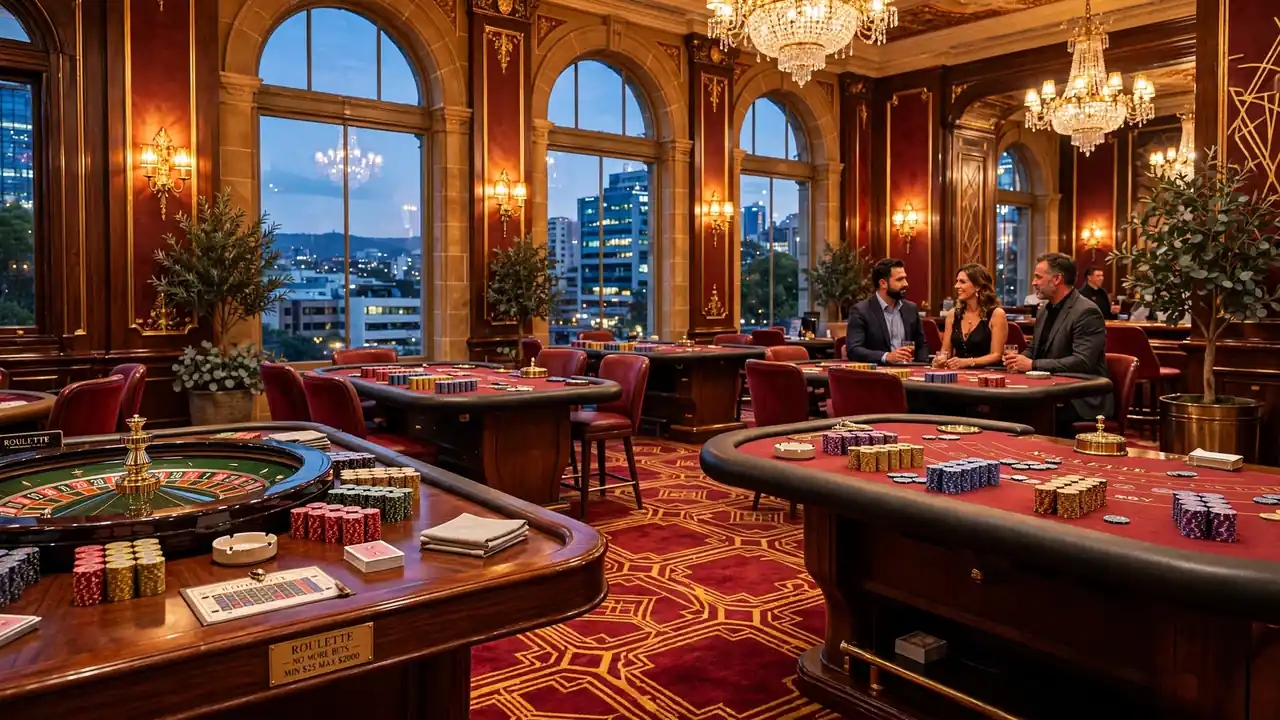
Poker, pokies and other facilities are separate things, even when a venue’s entertainment is described broadly as “gaming”. A poker room is a place to play poker against other people; a poker tournament is an organised competition with its own entry conditions and structure. Pokies are Electronic Gaming Machines (EGMs), where each game is played against the machine. Finding one type of gaming at a venue would not establish that the others are available there.
A place to play poker against other people.
An organised competition with its own entry conditions and structure.
Electronic Gaming Machines (EGMs) where each game is played against the machine.
If you are considering poker at a Tasmanian casino, confirm that the venue currently runs the particular game or tournament you have in mind. A listing that mentions poker does not, by itself, tell you whether play is regular, tournament-based or limited to a special event. Tournament details can also determine whether the format suits you: check how registration works, when play begins, what rules apply and whether places are limited. Do not rely on an old event listing as evidence that a tournament is still scheduled.
The same distinction matters when you see references to casino rooms. In this context, “rooms” might mean a poker-playing area or another gaming space, not accommodation. Confirm what the description refers to before making plans. A room name alone does not establish which games are played there, whether access is restricted or whether the area is open at the time you intend to visit.
A gym is a separate amenity, not a gaming facility. A casino’s name or a general description of its services is not enough to establish that a gym is on site or available to visitors. If exercise facilities matter to your plans, look for a current description that identifies the facility and its access conditions rather than inferring availability from the venue’s other offerings.
For a sports bar, check current venue information separately from poker or gaming details. The phrase may refer to a particular type of bar, but it does not confirm that one operates at the casino or that it is open when you plan to go. Bar services and gaming areas can have different access arrangements, so confirm the relevant details rather than assuming that a venue’s overall opening status applies to every part of it.
“Open now” and “open today” also need careful interpretation. A venue may be operating while a particular gaming area, tournament or other facility is unavailable. Check the current operating information for the specific activity you want, and confirm any event details with the venue before travelling. An undated listing or a general opening notice may not answer whether poker is being played at that time.
For poker-machine gambling, venues must check identification. Bring valid identification and follow the venue’s entry and play requirements. Set a session budget that fits your bankroll before you begin, and do not increase your bets to try to recover losses. Each decision to continue changes how much you risk, but it cannot make earlier losses more likely to return.
Treat each facility as a separate claim to verify: poker, tournaments, pokies, a gym and a sports bar are not interchangeable. That approach helps you establish what is actually available without mistaking a search result or a broad venue description for confirmation.
Online Casino Searches and the Limits of Australian Access
A casino visit and an online casino account are different things. A physical venue is a place you travel to; an online service provides games over the internet. Looking for a casino in Tasmania does not, by itself, tell you whether you mean a venue or an online gambling service. Parking, bingo and dining are venue-related topics, while online access is governed by a separate legal framework.
Legal Restriction
Under the Interactive Gambling Act 2001, operators based in Australia cannot lawfully offer real-money online casino games to people located in Australia.
Under the Interactive Gambling Act 2001, operators based in Australia cannot offer real-money online casino games to people in Australia. The restriction covers pokies and table games such as blackjack and roulette. In other words, an Australian-run website cannot lawfully provide those games to you while you are in Australia. The same distinction applies whether you are searching for an online casino in Tasmania or elsewhere in the country: your physical location matters, not just the wording of the website or the state named in a search.
Offshore platforms can create a more complicated picture. It is technically not illegal for an Australian player to use one, but an offshore platform is not regulated under Australian law. That does not make it an Australian-authorised service or give you the protections associated with a local regulator. The legal position of the operator and the position of the player are not the same question: the Act prohibits operators from providing these services to people in Australia, while player use of an offshore platform sits in a legal grey area.
Access can also be restricted in practice. Australian authorities actively block and enforce restrictions against prohibited online casino services. A site appearing in a search result, or loading at a particular time, is not proof that its games are lawfully offered to Australian customers or that the platform is regulated here. Conversely, a service or game that cannot be reached from Australia should not be treated as a temporary technical inconvenience without considering location-based restrictions.

This is why the phrase “best casino in Tasmania” needs context. If you mean a place to visit, online gaming rules do not establish which physical venue suits you. If you mean internet-based pokies or table games, the key distinction is whether the operator is Australian-based or offshore, and whether the service is permitted to provide games to people located in Australia. An offshore licence does not turn an online casino into a locally regulated Australian service.
Before acting on an online offer, read the legal description carefully rather than relying on labels such as “licensed” or “available in Australia.” A foreign licence is not an Australian licence, and it does not place the operator under Australian gambling regulation. If a dispute arises, the platform is outside the Australian regulatory framework. Treat availability, legality and consumer protection as separate questions: a website may be reachable without being locally regulated, and a search result cannot resolve that distinction for you.
Accommodation Near the Casino
Choosing accommodation near a casino starts with identifying the venue, not searching by state alone. “Tasmania casino” does not give you a street address, and distance depends on which venue you intend to visit. Confirm the venue’s exact location, then compare accommodation using the route you would actually travel. A property that appears close on a map may still require a different transport plan than one located along a direct route.
Treat distance as a practical question rather than a headline figure. Check the route between the accommodation and venue, including whether it is suitable for your arrival time and preferred way of travelling. If you expect to drive, confirm parking arrangements with both the property and the venue: accommodation parking and casino parking are separate services, and one does not establish the availability or cost of the other. Do not assume that a room rate includes parking.
- Check the actual route between accommodation and venue
- Confirm parking arrangements with both the property and venue
- Read the specific dates and cancellation rules of a deal
- Verify the property’s exact street address
- Rely on a map distance headline figure
- Assume a room rate includes parking
- Trust a promotion without reading its conditions
- Mistake a broad state search for a specific location
Searches for casino accommodation deals can turn up offers with conditions that affect their value. Before booking, read the dates, cancellation rules, payment terms and any restrictions on the advertised rate. Confirm whether the price applies to the room you need and whether additional charges are listed separately. A promotion is not necessarily cheaper for your plans if its conditions make it difficult to change or cancel the booking.
Keep accommodation details separate from casino operating information. A hotel or other property’s reception hours do not establish when a casino is open, and a casino’s trading hours do not tell you when you can check in. Check current venue information before arranging a late arrival or a return journey. If your plans depend on a particular facility being available, confirm that directly rather than treating an accommodation listing as evidence.
The same distinction applies to gaming machines and poker machines. Their presence at a venue, or their operating availability, cannot be inferred from a nearby room listing. If gaming access is part of your plans, verify venue information independently. Do not use a booking page’s location description as confirmation of facilities, promotions or opening times.
When comparing places to stay, consider the full trip rather than room price alone: the route, parking arrangements, booking conditions and the timing of your arrival and departure. Keep confirmation details accessible and check them before travelling, especially if a rate or reservation has conditions. If you cannot establish the address or terms from the booking information, contact the accommodation provider before paying.
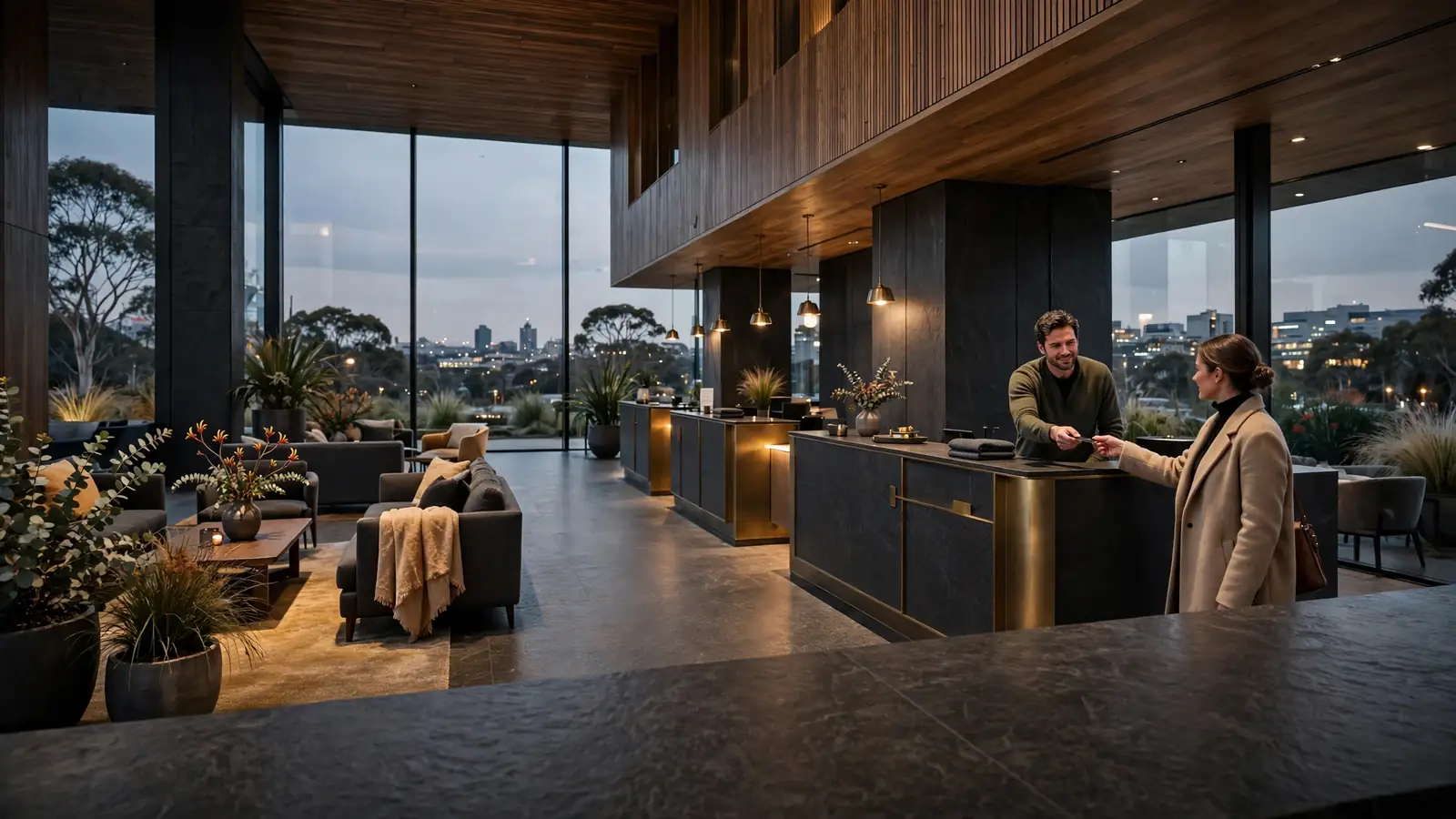
This approach makes “near the casino” a measurable choice: you know which venue you mean, how you expect to reach it and what the booking includes. It avoids relying on broad labels, assumed parking or an advertised deal whose conditions do not fit your itinerary.
Contact Details, Bars and Events
Treat a venue’s contact information, gaming options, bar service and event listings as separate details to confirm. A phone number or map pin can help you identify and reach a place, but it does not establish that the venue offers baccarat, craps, a bar or concerts. Check each point against information published by the venue itself before making plans.
When looking for a Tasmania casino contact number, start with the venue’s official website or its verified social-media account. Compare the listed number with the one shown on the venue’s own contact page, rather than relying on a directory entry or an old post. If you call, state what you need to know: for example, whether a particular table game is available, whether a bar is operating, or whether a named concert is scheduled. These are distinct questions, and an answer about one does not confirm the others.
A map listing is useful for locating a venue, but it may combine information from different businesses or retain details that have changed. Check that the pin, venue name and address refer to the same place. If you need directions to a car park, ask the venue which entrance or parking area to use; a map marker alone may not identify the correct access point. Do not assume that parking is on site or that a particular arrangement applies unless the venue confirms it.
A map listing may combine information from different businesses or retain outdated details; always compare it with the venue’s own current information.
The same distinction matters for baccarat and craps. A venue’s general casino description does not, by itself, confirm which games are available or when they can be played. If a specific game matters to your visit, ask directly and confirm the answer close to the date you plan to go. That avoids treating a broad description, an old listing or a third-party page as a current gaming schedule.
For concerts, look for an event announcement that identifies the venue and the performance, then check the venue’s own event information for updates. A concert listing does not necessarily describe the venue’s bar service, and a bar listing does not establish that an event is taking place. If you are relying on a particular performance or service, confirm it through the relevant official channel rather than inferring it from a general venue page.
Keep a record of the page or contact details you used if plans depend on them. If details conflict, use the venue’s direct contact channel to resolve the discrepancy instead of choosing whichever listing appears most recent. This is especially useful when a map, directory and event page show different names, locations or information.
These checks help separate what can be established from what is only suggested by a listing. A contact number is a way to ask; a map is a navigation aid; and an event or gaming description needs its own confirmation. None of those details, by itself, proves that a particular bar, table game, concert or car park is available.

Breakfast, Buffet Searches and Casino Jobs
Breakfast and buffet searches often combine several separate assumptions: that a casino operates a dining venue, that it serves breakfast, and that a buffet is available at the time you plan to visit. Those are distinct details. The word “resort” in a venue description does not, by itself, confirm any of them. A menu, service schedule and booking conditions need to be checked against current information from the venue before you make plans.
A buffet is also not interchangeable with a restaurant’s standard breakfast service. It describes how food is presented and selected, not when the venue operates or what is included. If you are checking a breakfast buffet, look for the service period, whether advance booking is required, and whether the published menu applies to the date of your visit. If those details are not stated clearly, do not treat a general dining reference as confirmation that breakfast or buffet service is available.
The same distinction applies to the phrase “casino resort”. It may be used broadly to describe a destination or a group of facilities, but it does not establish a particular breakfast offering. Treat each practical detail—food service, opening times and booking arrangements—as a separate point to confirm. This prevents a search result or a broad venue description from being mistaken for a current dining promise.
“Casino rewards” is another broad label rather than a specific benefit. A rewards scheme, if offered, can have its own eligibility rules and conditions; the label alone does not tell you what participation involves or whether dining is included. Check the operator’s current terms rather than assuming that a breakfast booking earns rewards or that rewards reduce its cost.
Dining and Employment
- Confirm breakfast and buffet availability via the venue’s current menu and schedule
- Verify that “casino resort” labels apply to specific dining services
- Check eligibility and conditions of rewards schemes independently
- Ensure job vacancies and application channels are verified by the employer
Checking casino employment information
Employment searches require the same separation between a general venue description and a current, specific offer. A reference to casino jobs does not establish that vacancies are open, which roles are available, or how an application is handled. A reliable listing should identify the employer and role, explain the application route, and state any requirements that apply to that position. Confirm that the listing is current and that the application channel belongs to the employer before providing personal information.
Do not infer a hiring process from a job title alone. Duties, qualifications, work arrangements and selection steps can differ between roles and employers. If a listing leaves an important condition unclear, seek clarification through the employer’s own recruitment contact rather than relying on an unrelated repost or an old summary.
For both dining and work, the useful question is not whether a venue sounds like a resort or a casino employer, but whether the specific service or vacancy is confirmed by the responsible business. Check the details that affect your decision—service availability and booking conditions for breakfast, or role requirements and application instructions for employment—and treat anything not stated as unresolved. That approach avoids turning a broad description into a promise about a meal, a rewards benefit or a job.
Opening Hours, Entertainment and Development
A result saying that a Tasmanian casino is open can refer to different things: a venue’s regular operating schedule, a particular gaming area, or an event taking place on a specific date. Those are not interchangeable. A schedule describes expected access; it does not confirm that every service is operating at that moment. A reopening notice is also time-sensitive: it should identify what is reopening and when, rather than being treated as proof of current hours.
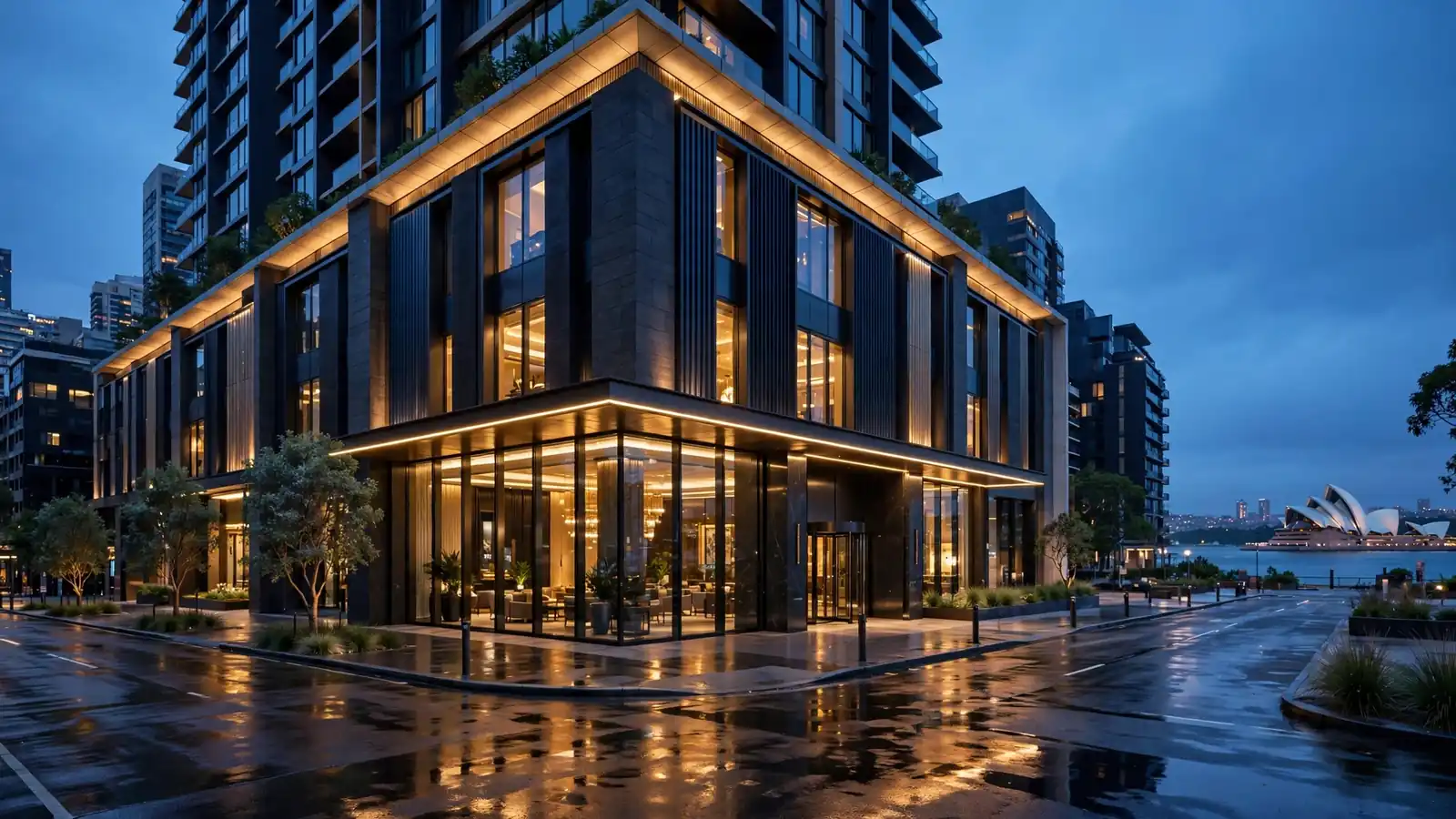
For a useful check, look for a publication date and wording that clearly distinguishes normal operations from a temporary change. An old listing may remain visible after hours have changed, while an event page may describe access only for its advertised programme. If the information does not state the relevant date or scope, it cannot reliably answer whether the venue is open when you plan to visit.
Entertainment announcements need the same care. An event listing is evidence of a scheduled programme, not a standing promise that the activity will recur. Check whether it gives a date and whether the announcement describes a confirmed event rather than a proposal. A general review can help explain someone’s past experience, but it cannot establish today’s schedule or confirm that a particular performance is still planned.
Development reports also describe stages that should not be collapsed into one. A proposal, an approval, construction activity and an operating facility are different states. A report about a planned change does not mean the change has been completed, and employment activity connected with development does not by itself show that a new facility is open. For employment information, distinguish a current vacancy from a general statement about hiring or a past recruitment notice; each has a different practical meaning.
A menu is another separate piece of information. It may indicate what was offered when it was published, but it does not establish current opening hours or an event schedule. Treat a review’s menu description as a dated account unless it is clearly presented as current.
Attention: An old listing or a general review cannot establish today’s operating schedule or confirm that a particular performance is still planned.
When assessing a review, separate observable details—such as the date of a visit—from opinions about atmosphere or service. A review may be useful context, but it is not a substitute for a current operational notice. The same principle applies to claims that a venue has reopened: the wording should identify the date and what resumed, rather than relying on an undated headline. These distinctions help you judge what a notice actually confirms without assuming that hours, entertainment, development and employment all change together.
Restaurants and Dining Searches
A restaurant associated with a casino can mean several different things: a dining room inside the venue, a separately operated business on the same property, or an independent restaurant nearby. Those distinctions affect where you enter, who handles reservations and which business is responsible for the menu. A listing that places a restaurant near a casino does not, by itself, establish that the restaurant is part of the casino.
For a casino in Tasmania, first identify the specific venue a listing refers to. The word “casino” alone may not tell you which property is meant, and a search result can combine information about different places. Check that the restaurant’s own information names the same venue and location as the casino information you are using. If the details do not match, treat the connection as unconfirmed rather than assuming the restaurant is on site.
How to check a restaurant listing
Look for information published by the restaurant or the venue responsible for it. A current menu, reservation page or direct statement of location is more useful than a short directory entry, which may omit whether the business is inside the casino, on its grounds or simply in the surrounding area. Check that the page identifies the restaurant clearly and that its location and operating details are consistent across its own information.
A menu can establish what the restaurant says it serves, but it does not necessarily establish that the restaurant is open when you plan to visit. Likewise, a booking page may accept reservations without explaining how to reach the restaurant from the casino. Confirm the location and visit arrangements directly with the business before setting out, especially if the distinction between on-site dining and a nearby restaurant matters to your plans.
When you compare restaurants, use details that answer practical questions: the type of food offered, the published menu, reservation requirements and any stated conditions for entry. Do not infer these from the casino’s general description. Dining options can be operated separately from a casino, so the venue’s name alone does not establish who manages the restaurant or handles a booking.
If a listing gives conflicting information, rely on the restaurant’s own current details or contact the business through a channel it publishes. Avoid treating an old menu or an undated directory entry as confirmation of present arrangements. This approach helps distinguish a genuine restaurant at a casino from a restaurant elsewhere in the area, without assuming either is available.
Spa Searches, Address and Dress-Code Questions
A spa result associated with a casino does not by itself establish that the spa is inside the venue. It may refer to a separate day spa nearby, a service at another property, or an outdated listing. Before planning around a treatment, confirm the spa’s name, exact location and booking details directly with the business. Check whether its entrance is within the casino complex or at a different address; a shared area name is not proof that two businesses occupy the same premises.
Verifying a Spa
Confirm the spa’s name, exact location, and booking details directly with the business. Check if the entrance is within the casino complex or at a separate address, as a shared area name does not prove shared premises.
The same distinction matters when checking an address. Search results and map pins can identify a general destination without clarifying which entrance serves visitors. Compare the address on the venue’s own current information with the map listing, then look for directions that identify the public entrance. If the details conflict, contact the venue before travelling rather than assuming the pin marks the correct door.
Dress-code information should also be confirmed for the specific place you plan to visit. A casino, spa and other businesses at or near the same location may set different entry requirements. Do not infer a spa’s rules from the casino’s, or assume that a general venue listing covers every area. If the policy is not clearly stated, ask the relevant business whether it applies to your planned visit and whether any clothing or footwear restrictions matter.
These checks are useful when the purpose of your visit is a day spa rather than casino gaming. Confirm that the service is operating at the location you intend to visit, and that the booking is with the business named in the listing. A result labelled as a casino spa can describe an association, not necessarily an on-site facility.
For a practical check, keep the details together: the business name, street address, entrance instructions, booking confirmation and dress requirements. Recheck them close to your visit, since business listings and access arrangements can change. This avoids treating a broad search result as confirmation of a particular facility or policy.
Gaming-related listings require a separate distinction. In Australia, the Interactive Gambling Act 2001 prohibits operators from providing real-money online casino games, including pokies and table games, to people physically located in the country. That legal restriction concerns online services; it does not establish the address, spa facilities or dress rules of a physical venue. For those details, rely on current information from the specific business you intend to visit.
Food and Pool Searches
Food and pool searches concern facilities, not proof that a particular Tasmanian casino provides them. A venue’s name or casino status does not establish whether food is sold on site, whether there is a food court, or whether visitors can use a pool. Treat each as a separate detail to confirm before making plans.
The term food court suggests several food outlets sharing a seating area. It does not mean the same thing as a single café, bar serving meals or dining room. If you need a particular arrangement, check the venue’s own current information for the type of food service, its location and any access conditions. A listing that mentions food in general may not answer whether there is a dedicated food court.
Pool information needs the same care. A pool could be part of a hotel or another nearby facility rather than a casino amenity, and access may be limited to particular guests or visitors. Confirm which property the information describes and whether the pool is available to the public before relying on it. Do not assume that a pool is included just because accommodation or leisure facilities appear in a broad venue listing.
For either subject, check that the details refer to the specific property you intend to visit and are current. Third-party directories can combine information from different businesses or leave old descriptions online. If an official listing does not clearly answer your question, contact the venue directly before travelling. This avoids treating a nearby food outlet as an on-site service or mistaking a pool elsewhere in the area for a casino facility.
These distinctions matter because “food” can describe anything from a single outlet to several options, while “pool” may refer to a separate property. Confirm the facility itself, its location and who can use it; the label alone is not enough.
What is pokies region blocking?
It is a restriction that uses your IP address to identify your location and prevent access to certain games. Blocked games may not appear in the lobby or may fail to load.
How do I know if a pokie machine is fair?
Online pokies use a Random Number Generator (RNG), and each spin is independent of previous spins. RTP describes the theoretical share of wagers returned over a very large number of spins; it does not predict the result of an individual spin.
Are online casino-style games restricted in Australia?
Yes. Under the Interactive Gambling Act, operators based in Australia cannot offer online casino games such as pokies, blackjack and roulette to players in Australia. Offshore platforms may be accessible, but they are not regulated under Australian law.
What does the legal status of offshore online casinos and NSW gambling law say?
It is technically not illegal for Australian players to use offshore online casinos, but those platforms are not regulated under Australian law. In NSW, you must be at least 18 to gamble on poker machines, and mandatory pre-commitment systems require players to set a loss limit before playing.
How do online pokies operate?
An RNG determines each spin, and every spin is independent, so earlier outcomes do not affect later ones. RTP is the theoretical percentage of wagered money returned over a very large number of spins.
Written by the editors at Levelupcasinoinfoau.com.