Pokies in Canberra: Checking Venue Hours and Access
 Available in AU
Venue hours, gaming-area access and location claims require separate checks; an open premises alone does not confirm pokies are available.
Table of Contents
- Checking Whether a Canberra Venue Is Open
- What “Best” Can—and Cannot—Mean for Pokies
- The Legal Limits of Online Pokies in Australia
- Finding a Venue Near Canberra Airport or the CBD
- What Venue-Level Reporting Can Tell You
- Why 24-Hour Availability Cannot Be Confirmed Here
- What Can Be Verified About Crown and Canberra
- Canberra CBD Clubs: What the Available Information Establishes
- Pokies in Parkes: Location Claims to Check
- Cashless Pokies and the Newcastle Search
Checking Whether a Canberra Venue Is Open
Whether a Canberra venue is open is a question about a particular place at a particular time. An opening-hours listing can help you plan, but it is not proof that its pokies area is operating at the moment you arrive. The venue and its gaming area are related, but they are not necessarily governed by the same schedule.
A venue’s general hours describe when the premises, or parts of it, are open to customers. A listing might cover a bar, dining area, reception or other facilities. The gaming area can have separate hours, or its availability can be affected by circumstances that do not close the whole venue. So a statement that a venue is open does not, by itself, answer whether you can play pokies there now.
The distinction matters most when you are travelling specifically to use the gaming area. A venue could be open while that area is not available; the reverse assumption is no safer. Even a current-looking listing may describe the venue’s general schedule rather than the status of each facility. Read what the hours refer to, not just the word “open”.
Check the gaming area, not just the premises
Before setting out, look for information that explicitly refers to gaming-area or pokies hours. If the wording is unclear, contact the venue through a contact method it publishes and ask a direct question: is the gaming area open now, and what hours apply today? This is more useful than asking only whether the venue is open, because it identifies the facility you intend to use.
If you are checking a listing, note its date and scope. A page may show regular hours without indicating whether those hours apply to the gaming area. A map or directory entry can also be useful for basic planning, but its opening indicator should not be treated as confirmation of current access to pokies. Where two listings disagree, use a direct response from the venue rather than guessing which one is more recent.
A call made earlier in the day can also become outdated. If your travel time is significant, or your plans depend on arriving at a particular hour, confirm close to departure. Ask about the day in question rather than relying on a typical weekly schedule. This avoids treating a standard timetable as a live update.
Early and late visits need specific confirmation
If you are considering an early visit, ask whether the gaming area is available at that time. Do not infer that it opens with the venue, or that an early opening listed for one facility applies to another. The same principle applies to late visits: the closing time of a bar or restaurant does not establish when the gaming area closes.
Time descriptions can also be imprecise. “Open today” may mean that the premises operate at some point during the day, not that every facility is accessible throughout that period. “Open now” can become stale if it comes from a listing that has not updated in real time. For a time-sensitive trip, the useful confirmation is a direct answer about the gaming area at the time you expect to arrive.
- Look for information that explicitly refers to gaming-area or pokies hours
- Contact the venue directly to ask if the gaming area is open
- Confirm availability close to your departure time
- Assume the gaming area follows the venue’s general opening hours
- Rely on a general “open” status as proof of pokies access
- Treat a standard weekly timetable as a live update
If you cannot obtain a clear answer, treat the status as uncertain and make a backup plan rather than assuming access. That is especially important when you are travelling specifically for pokies and have no other reason to visit. A general-hours result can still help you understand whether the premises may be operating, but it cannot settle the more specific question on its own.
The same distinction applies if you are comparing opening information with a stated payout percentage. Opening status concerns access at a given time; it does not establish anything about a game’s settings or likely returns. Keep those questions separate, and seek information relevant to each one rather than treating a venue’s availability as evidence about how its pokies operate.
A practical check can be brief: confirm the date, identify whether the listed hours cover the gaming area, and ask the venue whether that area is open when you plan to arrive. If the answer concerns only the premises, ask again specifically about pokies. This makes the information useful for your decision without confusing a venue’s general operating schedule with current access to its gaming facilities.
What “Best” Can—and Cannot—Mean for Pokies
If you’re looking for pokies in Canberra in 2026, this list gives you a concise reference point for reviewing the operators and the limited details available about each.
License: Curacao eGaming OGL/2024/923/0383 (Antillephone N.V.) · Min. deposit: A$30 WinSpirit Casino lists a Curacao eGaming licence, OGL/2024/923/0383, issued through Antillephone N.V. Its stated minimum deposit is A$30.
License: Curacao Gaming Authority (Jumpman Gaming Ltd) DragonSlots Casino lists a Curacao Gaming Authority licence held by Jumpman Gaming Ltd. That licensing detail is the main available point of reference for you.
License: Curacao (operating since 2017) · Min. deposit: A$20 Uptown Pokies has operated since 2017 and lists a Curacao licence. Its stated minimum deposit is A$20.
License: Curacao Gaming Control Board (TechSolutions Group N.V.) Bizzo Casino lists a Curacao Gaming Control Board licence associated with TechSolutions Group N.V. This licensing information is the available detail for your review.
License: Curacao Gaming Control Board OGL/2023/176/0095 (Hollycorn N.V.) Rollero Casino lists Curacao Gaming Control Board licence OGL/2023/176/0095, held by Hollycorn N.V. You can use that information as a reference when considering the operator.
License: Curacao Gaming Control Board OGL/2023/174/0082 (Dama N.V.) SpinsUp lists Curacao Gaming Control Board licence OGL/2023/174/0082, held by Dama N.V. The licence is the main stated detail available for you to assess.
License: Curacao eGaming (Dama N.V.) JeetCity Casino lists a Curacao eGaming licence associated with Dama N.V. This is the available licensing detail to consider.
License: Curacao Gaming Control Board OGL/2023/176/0095 (Hollycorn N.V.) LuckyVibe lists Curacao Gaming Control Board licence OGL/2023/176/0095, held by Hollycorn N.V. Its stated licence details provide a reference point for your review.
License: Curacao eGaming (Roby Games Ltd) Roby Casino lists a Curacao eGaming licence associated with Roby Games Ltd. This licensing information is the main available detail for you.
License: Curacao Gaming Control Board JustCasino lists a Curacao Gaming Control Board licence. No further operator details are provided here, so this is the available point of reference for you.
“Best” depends on what you are measuring. A pokie may appeal because of its theme, features or pace, while a player comparing potential returns is asking a different question. Those preferences do not establish which game pays more, and a search for the best pokies in Canberra cannot be answered reliably by treating popularity or appearance as evidence of a higher return.
Each spin is a separate event generated by a Random Number Generator (RNG). The RNG determines the result for that spin; the previous result does not make a particular outcome due next. A run of wins or losses therefore cannot tell you what the next spin will produce. Nor does a recent payout, by itself, show that a machine has become more or less likely to pay.
This independence matters when you compare games. A player may observe a short session and use it to describe what happened during that session, but not to establish a dependable ranking. Short-term results can differ sharply from the outcome a game is designed to produce over a much longer run. That is why a machine that has just paid out cannot be assumed to be a better choice, and a machine that has not paid cannot be assumed to be “ready.”
Return to player, or RTP, is a theoretical measure of the share of wagers a game is designed to return over extensive play. It describes an aggregate expectation, not a promise about an individual session. It does not tell you when a win will occur, how large a particular payout will be, or what you will receive from the next spin. Even a stated RTP cannot turn chance into a predictable sequence.
There is another complication: the name and appearance of a game may not be enough to identify its return setting. A specialist review reports that some game providers give casinos a choice of RTP settings for a particular pokie. Where that arrangement applies, the same game can have different return percentages at different casinos. The report is not evidence that every provider or every venue uses selectable settings; it does show why you should not assume that identical titles necessarily have identical settings.
If you are comparing Canberra pokies, separate three questions: whether you like the game, what return information is available for its specific version, and whether that information can be tied to the machine you are considering. A title match alone answers only the first part of the identification problem. The setting matters, and a general description of a game may not state which setting a particular casino has selected.
Be careful with claims that a game is among the best-paying pokies in Canberra. To support that comparison, the evidence would need to identify the relevant game version and its return setting at the relevant venue. A broad claim based on a title, a player’s recent experience or an unspecified list does not establish those details. Without them, a ranking can sound precise while comparing unlike information.
Attention: A game’s title alone does not guarantee a specific return setting, as some providers allow casinos to choose between different RTP options for the same pokie.
The same distinction applies to searches for Canberra casino pokies or pokies in Canberra CBD. Location words identify where someone hopes to play; they do not tell you the RTP setting of any machine there. Likewise, descriptions such as “popular” or “featured” are not measures of return. They may explain why a game is visible, but they do not show that it offers a higher theoretical return than another game.
A practical comparison should therefore be modest. Treat each spin as uncertain, distinguish a game’s theoretical return from short-term results, and look for information that identifies the actual setting rather than relying on the title alone. If the setting is not stated or cannot be confirmed for the machine, you cannot make a sound return-based comparison. “Best” can describe your preference; it cannot be treated as a verified claim that a particular pokie or Canberra venue will pay more.
The Legal Limits of Online Pokies in Australia
Searching for online pokies from Canberra does not change the rules that apply to people in Australia. The Interactive Gambling Act 2001 makes it illegal for companies to provide real-money online pokies to Australian residents without a domestic licence. No such licences have been issued, so there is no Australian-licensed online casino.
That distinction matters when you see an offer described as an online casino for Canberra players, or as a place to play for real money. A site’s wording, payment options or promotional terms do not create an Australian licence. Nor does a reference to Canberra establish that the service is local or authorised to provide online pokies in Australia.
The law described here targets the companies offering the service, rather than making the player liable for using an offshore site. That does not remove the practical risks for you. If an offshore casino refuses to pay winnings, you have no legal recourse in Australia to compel payment. The absence of a local licensing system also means there is no Australian-licensed online casino through which to resolve that dispute.
Access is another issue. The Australian Communications and Media Authority (ACMA) blocks access to illegal offshore gambling sites, and internet service providers must comply with its blocklist. A site appearing in a search or loading at one time does not demonstrate that it is lawful, locally licensed or reliably available. Blocking can affect access, while a site’s own claims cannot override the legal position.
Terms such as “no deposit” or “high limits” describe an offer or a claimed feature; they do not change who is legally permitted to provide real-money online pokies. A bonus label is not evidence of Australian authorisation, and a maximum bet claim does not establish that winnings will be paid. If a site’s terms are difficult to understand, that uncertainty is material when there is no Australian legal route to recover unpaid winnings.
Legal Risk
No Australian-licensed online casinos exist; using offshore sites means you have no legal recourse in Australia if a casino refuses to pay winnings.
The same distinction applies when you compare online options with physical pokies in Canberra. An online service is not a Canberra venue merely because it targets people in the city or uses the city’s name. For online play, the relevant point is whether the company is permitted to offer the service to people in Australia. No Australian-licensed online casino exists.
A cautious way to assess a claim is to separate three questions: whether the service offers real-money online pokies, whether it holds an Australian licence, and what remedy you would have if it did not pay. Under the current licensing position, the second question has no positive answer for an online casino, and the third carries a clear risk: Australian players have no legal recourse here against an offshore casino that withholds winnings.
This does not make every claim on a site false, but it does mean that claims about “best-paying” games, local availability or welcome offers cannot substitute for legal authorisation or a remedy if something goes wrong. Treat them as claims made by the operator, not as protection for you. The legal limit is set by the Interactive Gambling Act 2001, not by the wording of an advertisement or the location named in it.
Finding a Venue Near Canberra Airport or the CBD
A location label is not proof that a pokie venue is inside an airport, in the city centre or within a particular distance of either. To assess proximity, you need a confirmed street address and a clear destination point. Without those, “near Canberra Airport” and “near the CBD” are descriptions, not measurable locations.
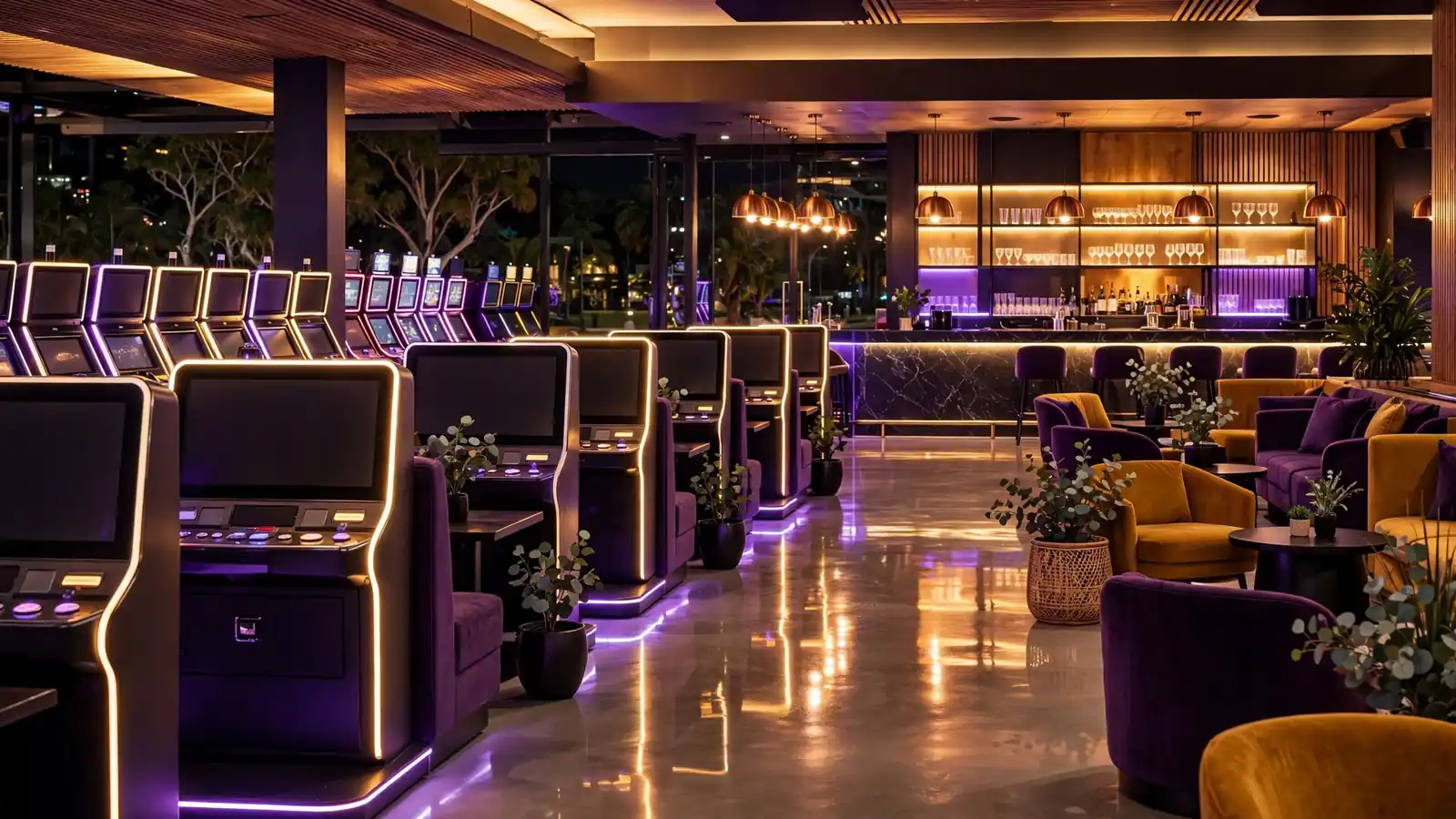
The airport search can refer to different places: the terminal, the wider airport precinct or nearby roads. A result described as being near the airport may be outside the terminal area, and the word “near” does not specify how far away it is. Before treating a result as a practical option, check its address against the precise airport destination you have in mind and consider the route you would actually travel.
The same distinction applies to central Canberra. “CBD” is a broad label rather than an address. A venue described as close to the CBD could be at its edge or elsewhere in the surrounding area. A pin on a map may help you understand the general position, but it should be matched to the venue’s own address; a search-result label alone cannot establish the exact distance.
Distance also depends on how it is measured. A straight-line measurement between two points can differ from the distance along roads or a walking route. If you are planning a trip, use a route between confirmed addresses, then check whether the route and transport method suit your needs. Do not assume that a short-looking map distance means a direct or convenient journey.
Location terms can create further uncertainty. “North Canberra” describes a broad area, not a particular venue. Likewise, a search containing “Canberra, Vic” may reflect an imprecise location label or a mistaken state abbreviation. Confirm that an address is in the intended Canberra location in the Australian Capital Territory rather than relying on a heading or automatically generated result.
Confirming Venue Location
- Obtain the venue’s exact street address
- Identify your precise destination point
- Map the actual road or walking route between the two points
- Verify the address is in the Australian Capital Territory
A “near me” result depends on the location setting of the device or service producing it. If that setting is inaccurate, disabled or centred on a different place, the displayed proximity may not reflect where you are. Check the map’s current-location marker and compare it with the address before relying on the result.
For a useful comparison, establish three things: the venue’s exact address, the destination point you want to reach, and the route between them. If any of those is unclear, the claim that a venue is near Canberra Airport or the CBD cannot be assessed reliably. This method helps separate a confirmed location from a broad label without assuming that a pokie venue is located inside either area.
What Venue-Level Reporting Can Tell You
A venue’s approach to gambling harm is not measured by its machines or by a “best” label. One useful indicator is whether it has procedures for responding when a patron appears to be experiencing harm. Those procedures concern staff responsibilities and record-keeping; they do not establish that a particular Canberra venue meets a requirement.
A report by regionriverina.com.au describes a rule for venues operating more than 20 gaming machines: from 1 July, a dedicated responsible gambling officer (RGO) must be on duty while those machines are operating. The threshold matters. The reported requirement applies to venues above it, not automatically to every venue with pokies. The report also describes a one-month grace period for venues to introduce the officer role and remove signage.
The timing condition is just as important as the staffing condition. The RGO is required while the machines are operating, so a venue’s general opening hours do not by themselves show whether an officer should be on duty at a particular time. Nor does the rule establish that an officer is present at a Canberra venue: that would need to be confirmed locally.
The officer role is only one part of the reported oversight framework. Venues are also expected to keep a gambling incident register. It records occurrences such as a patron displaying behaviour that suggests they may be at risk of, or affected by, gambling harm. This creates a record of concerns rather than relying entirely on staff memory or an informal conversation.
For someone comparing Canberra venues, that distinction helps keep evidence in proportion. A published requirement tells you what a covered venue is expected to do; it does not prove that a specific venue has more than the threshold number of machines, that the rule applies to its jurisdiction, or that it has complied. Those are separate questions. A general description of responsible-gambling practices is not a substitute for confirmation of the venue’s actual arrangements.
You can ask a venue whether an RGO is on duty when its gaming machines are operating and how staff record incidents involving possible gambling harm. A clear answer can explain its process, but it should not be treated as independent proof that every requirement has been met. The register is an internal record, not a public ranking or a measure of which venue offers better odds.
Venues operating more than 20 gaming machines are required to have a dedicated responsible gambling officer (RGO) on duty while those machines are operating.
This kind of reporting is therefore most useful for understanding accountability: who is expected to respond, when the role applies, and what incidents are recorded. It cannot identify the best pokies venue in Canberra, certify a venue’s compliance, or show how any individual machine will perform. Those conclusions require evidence beyond a general report about venue obligations.
Why 24-Hour Availability Cannot Be Confirmed Here
A venue’s opening hours and the hours of its pokies are separate things. A building may be open to customers while a particular area or service is unavailable. Conversely, a venue’s general closing time does not, by itself, establish when its gaming machines stop operating. To confirm round-the-clock access to pokies, you need information that specifically covers the machines, not just the venue’s doors.
That distinction matters when you are planning a visit: a listing that describes a venue as open does not necessarily confirm that its gaming area is accessible at that time. Nor does the phrase “open now” establish the status of the machines.
Hours can also be described in different ways. A venue may publish one schedule for its overall operation and separate information for particular facilities. If a listing gives only general opening hours, it answers when the venue is expected to be open, not necessarily when you can play pokies. A claim of continuous operation needs to be explicit about what is operating continuously.
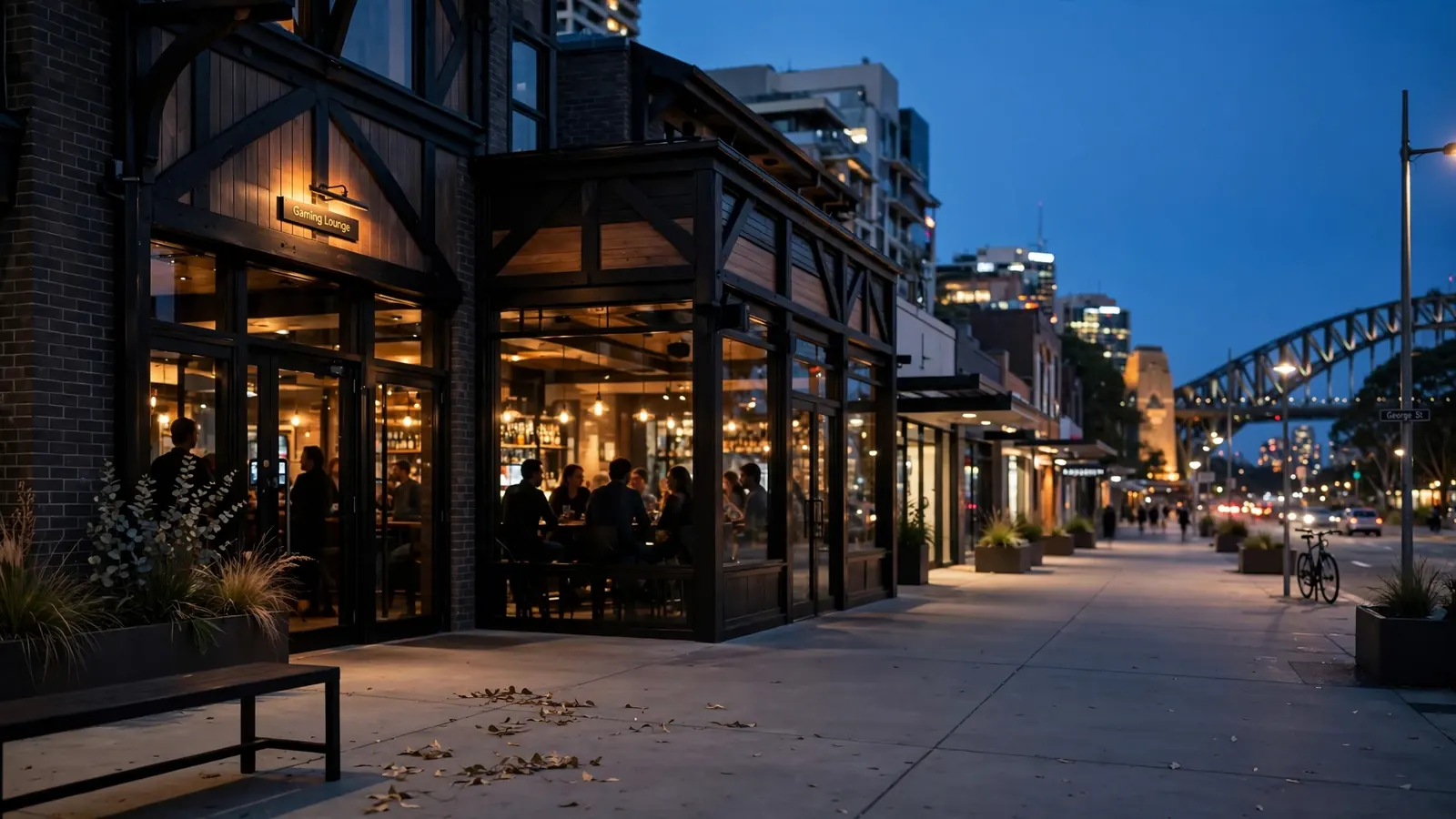
When checking an hours claim, look for the date it was updated and for wording that clearly refers to the gaming area or pokies. If the information is ambiguous, contact the venue directly and ask whether the machines will be available at the time you plan to arrive. This is more useful than relying on a broad label such as “24-hour venue”, which may refer to the building or another service rather than gaming.
The same care applies to claims about regular opening hours. A schedule can change, and information that was accurate at one time may not describe current arrangements. Confirm the relevant hours close to your visit, and make sure the answer concerns the pokies rather than the venue in general.
In short, “open around the clock” and “pokies available around the clock” are not interchangeable statements. Without hours that specifically establish machine availability, a 24-hour claim should not be treated as confirmation that you can play at any time.
What Can Be Verified About Crown and Canberra
The name “Crown” alongside “Canberra” does not, by itself, identify a casino in the city. A search result or page title can combine a brand name with a location without showing that the brand operates there. Treat those as separate claims: one is about Crown; the other is about a physical venue in Canberra.
The same distinction applies when you are looking for pokies. A reference to Crown pokies is not proof that those machines are available in Canberra, and a Canberra page mentioning Crown is not proof of a local Crown gaming room. To establish a connection, the information would need to identify the specific venue and its location, rather than rely on the words appearing together.
Distinguishing Brand from Location
Seeing a brand name like “Crown” alongside “Canberra” in search results does not prove a physical venue exists there. You must verify the specific address and operator to establish a connection between the brand and the city.
“Best pokies room” is also a separate claim from whether a named operator has a Canberra venue. The phrase does not identify a particular room or provide a basis for comparing one. Likewise, a claimed maximum cash payout needs to be tied to a specific venue and its applicable rules. A figure without that context cannot tell you what would be payable at a Canberra location.
This matters because brand, venue, machine and payout are different things. A brand name identifies an operator or business identity; a venue name and address identify a physical site; a machine listing concerns what is available there; and payout conditions depend on the relevant rules. Evidence for one does not automatically establish the others.
When a page makes a Crown-and-Canberra claim, check whether it names a physical address and clearly identifies who operates that location. Then check whether any statement about pokies or payouts is specifically connected to that venue. If the wording only places the two names together, it does not settle where the venue is or what it offers.
Nor does it establish which room is best or what its maximum cash payout would be. Those are distinct claims, and each needs information tied to the particular venue rather than an association between names.
Canberra CBD Clubs: What the Available Information Establishes
A club and its pokies are separate things to verify. A club may provide hospitality or other facilities, while access to its gaming area can depend on the venue’s arrangements. The word “club” alone does not establish that pokies are available, where they are located, or what rules apply to them.
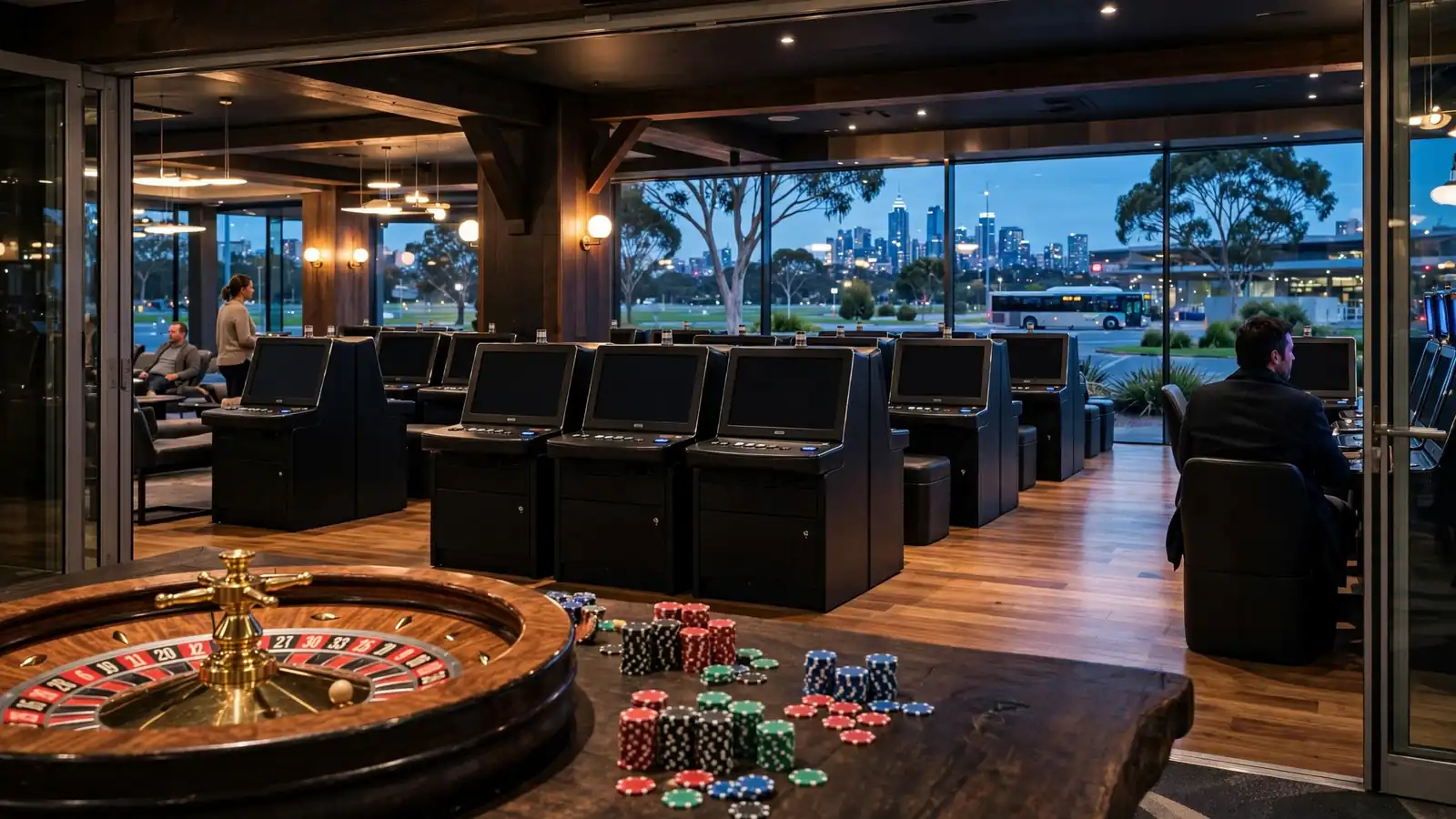
If you are considering a particular Canberra CBD club, use information that identifies the venue and the gaming area specifically. A general listing for a club, a map result, or a reference to Canberra does not by itself confirm that the venue has pokies. Nor does it establish a machine count or show that a particular club is better than another. Those details matter because a broad description can refer to different services or locations.
“Best” is not a measurable property unless you define what you mean by it. You might be comparing access arrangements, facilities, or the availability of responsible-gambling support. Those are different criteria, and none can be inferred simply from a club’s name or CBD location. For a practical comparison, check the current details directly with the venue and make sure they relate to the specific facility you intend to visit.
Self-exclusion is a responsible-gambling tool: it is intended to help a person restrict their own access to gambling. Do not assume that a general reference to self-exclusion explains how a particular club handles it. Before relying on the option, ask the venue what process applies, what areas or activities it covers, and how the restriction is put in place. The answers need to relate to that venue; an online service’s rules do not automatically describe a club’s arrangements.
BetStop is a separate national self-exclusion service, and its scope is limited to Australian-licensed operators. It does not bind offshore gambling sites, so it should not be treated as a general restriction on every form of gambling. For a physical club, ask about the venue’s own arrangements rather than assuming BetStop covers entry to its gaming area.
CBD Club Verification
- Confirm if the club actually has pokies as part of its facilities
- Verify specific access and support arrangements directly with the venue
- Distinguish between a club’s own self-exclusion process and national services like BetStop
- Treat location labels like “CBD” as broad descriptions rather than exact addresses
This distinction keeps a CBD club search precise: confirm the club, confirm whether pokies are part of its facilities, and check the relevant access and support arrangements with that venue. The location label alone cannot answer those questions.
Pokies in Parkes: Location Claims to Check
A reference to Parkes alongside Canberra does not, by itself, establish that a venue with pokies is located in Parkes. A place name can appear in a listing, map label or venue description for different reasons, so treat it as a lead to verify rather than proof of a gaming location.
Start with the exact venue name and street address, if both are provided. Check that the address belongs to the venue itself, not to a nearby landmark, a postal area or a business with a similar name. A map pin can help you understand where a claimed address sits, but it cannot confirm that pokies are installed there or available to patrons. Those are separate details.
Look for information that connects the specific venue to gaming facilities, and check that it refers to the same address. A general description of a club or entertainment venue is not enough to establish that it has pokies. Nor does a page mentioning Parkes necessarily show that the venue is inside the area you have in mind. If a listing gives only a suburb or district name, the precise location remains unclear.
Be cautious when several pages repeat the same claim. Repetition does not make a location independently confirmed if each page may be drawing on the same listing. Prefer current information published by the venue, or contact the venue directly to ask whether the address is correct and whether its gaming area operates there. Confirm the details before travelling; a name associated with Parkes is not a substitute for a verified address.
This distinction matters when you are comparing Canberra-area options. The words “Canberra” and “Parkes” can occur together without proving that a particular gaming venue is in Parkes. Until the venue identity, address and pokies offering all line up, the safest description is that the location claim needs confirmation—not that a venue has been established there.
Cashless Pokies and the Newcastle Search
“Cashless” can refer to different things. PayID is a way to send money between bank accounts using an alias, such as an email address, mobile number or ABN. It operates through the New Payments Platform (NPP), which major Australian banks support; transfers use end-to-end encryption. That describes a bank-transfer method, not a payment system installed at a pokie venue.
If you see PayID discussed in connection with online deposits, it does not show that a Canberra venue lets patrons fund play electronically. Nor does it establish that a venue has cashless gaming machines, linked accounts or another specific payment arrangement. Those are separate systems, and a claim about one cannot be inferred from information about the other.
The same distinction matters when Canberra and Newcastle appear together in a description of pokies. The place names alone do not identify a Newcastle venue relevant to Canberra, or establish where any particular venue is. A reference to cashless play does not fill in those location details.
To assess a claim, look for information tied directly to the venue and the payment process it describes. Does it refer to transfers through a bank account, or to paying for play at machines on site? Does it name the venue and specify the location? Without those details, “PayID,” “cashless” and a city name may be referring to different parts of the transaction—or simply sitting together without evidence of a connection.
Treat PayID as a bank-transfer method and venue-based cashless gaming as a separate feature requiring its own confirmation. One does not verify the other.
What is the legal age for online gambling in Australia?
You must be at least 18 years old to gamble online in Australia.
Are online pokies legal for Australian players?
You can legally play on offshore sites that accept Australian players, but offering real-money online pokies to Australians without a domestic licence is illegal for operators. No Australian online-casino licences have been issued.
How do I know if an online casino is safe to play at?
There is no Australian-licensed online casino, and you have no legal recourse in Australia if an offshore casino refuses to pay your winnings. ACMA blocks access to illegal offshore gambling sites.
What is the minimum PayID deposit?
Minimum deposits are usually AU$10 to AU$20, though some operators accept AU$5. PayID is treated like other qualifying deposit methods.
Can casinos change the RTP of their games?
Yes. Some game providers let casinos choose from multiple RTP settings for the same pokie, so its return percentage may differ between casinos.
Published by the Levelupcasinoinfoau.com team.