Casinos That Accept PayID in Australia: What to Verify
 Available in AU
A payment method shown on a casino site, available to select, or used for deposits does not necessarily confirm successful payments or withdrawals.

Table of Contents
- What the available evidence can—and cannot—confirm about PayID
- How to assess a casino’s payment information without relying on a name list
- What a deposit flow can tell you—and what it cannot
- Reading PayID acceptance claims for Australian casinos
- Keep the payment method separate from the games catalogue
- How Australian payment habits provide context, not proof of PayID support
- Withdrawal routes and the limits of the available timing evidence
- Real-money payment claims and the Australian legal boundary
- What to verify before treating a payment option as available
- PayID bonuses: no verified terms to report
What the available evidence can—and cannot—confirm about PayID
A casino’s payment options are specific to that operator and can differ by method. Information about card deposits, card withdrawals or other payment services does not establish that PayID is accepted. Those methods use different processes, and one appearing in a cashier tells you nothing conclusive about whether another is available. For that reason, details about American Express cannot be used to identify Australian online casinos that accept PayID.
This distinction matters because “accepts PayID” can refer to more than one point in a transaction. A site might display a payment method, allow you to choose it, or successfully process a payment through it. These are not equivalent claims. Nor does acceptance for a deposit establish that the same method can be used for a withdrawal. A statement about one stage should not be treated as evidence about another.
Availability may also change, so an old claim or a general description of payment options should not be treated as a present-day confirmation.
There is a separate legal context for any real-money casino service directed at people in Australia. Under the Interactive Gambling Act 2001, operators are prohibited from offering online casino games to people located in Australia. The Australian Communications and Media Authority is responsible for enforcing that Act. The law concerns the operator’s provision of the service; it does not explicitly make an individual player’s use of an offshore site a criminal offence. That distinction should not be mistaken for consumer protection: Australian consumer law does not protect players using offshore casinos.
Payment availability does not alter that legal boundary. A payment service being familiar or technically usable does not make an online casino lawful to offer in Australia, and it does not show that a particular casino accepts that service. PayID should therefore be treated as a payment claim about a particular operator, not as a sign that the operator is authorised to provide casino games to Australian residents.
Keeping those points separate avoids turning unrelated payment details into a false answer about PayID.

How to assess a casino’s payment information without relying on a name list
A list of sites labelled as PayID casinos can look decisive while leaving the important question unanswered: what does “accepts PayID” mean in practice? A payment method might appear in a general information page, be shown only to some account holders, or be described without clarifying whether it applies to deposits, withdrawals, or both. A name alone does not resolve those differences.
A useful assessment starts with the exact claim. “PayID available” is not interchangeable with “PayID deposits accepted” or “withdrawals sent by PayID.” Each describes a different part of a transaction. Nor does a statement about one account necessarily establish that the same option is available to every customer. Treat broad labels as a starting point, not as proof of a particular route or outcome.
The strength of a claim depends on where it appears and how specifically it is stated. An operator’s payment terms may describe the method and its conditions; a promotional page may use a shorter label without explaining them. A third-party list may repeat an old description or group several payment methods together. These materials are not equivalent. Look for a statement that identifies the transaction direction and explains any conditions, rather than relying on a heading or a badge.
Freshness matters too. Payment options can change, and a page may remain online after an operator changes its cashier. A dated statement gives you a basis for judging whether the information is current; an undated claim does not. Even a recent description should be read narrowly: it supports only what it actually says, not assumptions about other account types, currencies, or transaction stages.
Rankings need more scrutiny than simple claims. “Best” can refer to different things: the clarity of the payment terms, the availability of a deposit route, the handling of withdrawals, or unrelated features. Without a stated basis for comparison, an ordered list is not evidence that one site has better PayID support than another. A ranking should explain what was compared and how each conclusion follows from the information presented. Otherwise, the order may reflect editorial preference rather than a meaningful payment distinction.
- Identify the transaction direction
- Check for a stated basis for comparison
- Verify the date of the statement
- Look for specific terms and conditions
- Rely on a name list alone
- Interchange labels with proof
- Trust undated claims
- Use rankings without a stated basis
Do not treat references to payment brands as interchangeable. A site may support bank-linked services or other online payment options without supporting PayID. Familiarity with a payment service does not establish that it is offered by a particular operator. The claim needs to name PayID specifically and connect it to the relevant transaction. Likewise, a description of a deposit option cannot establish how winnings are paid.
Separate payment availability from account checks. Online casinos commonly ask customers to complete identity verification before allowing financial transactions. That assessment is distinct from whether a particular payment method is offered. Passing an identity check does not make PayID available, and seeing a payment method mentioned does not mean an account has completed the checks required for a transaction. These are separate conditions, so one should not be used as evidence for the other.
When reviewing a payment statement, note what it establishes and what it leaves open. Does it identify PayID by name? Does it specify deposits, withdrawals, or both? Does it state any account or verification conditions? Is the information current and attributable to the operator, rather than merely repeated by another page? If a statement does not answer one of these points, do not fill the gap with an assumption.

This is why a dependable comparison cannot be built from names alone. A list may be convenient to scan, but its value depends on traceable, specific claims and a consistent comparison method. Without those, calling a site a PayID option risks giving a stronger impression than the wording supports. The careful approach is to evaluate each payment claim on its own terms and keep it separate from identity checks, other payment services, and general site descriptions.
What a deposit flow can tell you—and what it cannot
A payment method’s name in a cashier is only one stage of a transaction. To understand what the flow shows, separate the steps a player takes from the checks that determine whether a payment is accepted. A documented American Express process illustrates this distinction, but it does not describe a PayID deposit.
In that card flow, the player selects American Express in the cashier, enters the card details and a deposit amount in Australian dollars, then submits the payment. These actions show how the payment request is prepared and sent. They do not, by themselves, establish that the casino can complete the transaction. A method may appear as an option while the payment still depends on whether the relevant parties allow it.
A specialist review describes Amex deposits as being processed instantly. That is a claim about the reported processing of this particular card method, not a general rule for every cashier or payment type. It also does not tell you how long it takes to enter payment details, whether a transaction will be approved, or what happens if the payment is declined. Those are separate parts of the process.
Amex Deposit Flow
The player selects American Express in the cashier.
The player enters card details and a deposit amount in Australian dollars.
The player submits the payment request for processing.
The payment is either completed or declined by the card issuer.
The same review notes that Amex may block a payment to a particular website, in which case the deposit can be declined. The point is that a submitted request is not the same thing as a completed payment: the card issuer can affect the result. The cashier’s display and the player’s submission cannot override a decision made at that level.
This example is useful for interpreting claims about a casino deposit by PayID, but only as a general illustration of the gap between selecting a method and completing a transaction. The Amex sequence involves card details and a card payment request. It supplies no evidence about whether PayID appears in any cashier, what information a PayID flow would request, or how a PayID payment would be authorised or processed. Those details cannot be inferred from a different payment method.
For the same reason, describing an Amex process does not identify a casino that accepts PayID deposits. A cashier flow is specific to the method displayed and the transaction being attempted. You cannot transfer its steps, timing, or possible issuer decision to PayID merely because both methods might be discussed as ways to fund an account. A claim about a PayID casino deposit needs evidence about PayID itself.
There is also a distinction between an available option and an available service for a particular user. A method name could be visible, yet a transaction may not complete; conversely, the steps for one method say nothing about the presence of another. Treat the cashier as evidence only of what it actually displays and requests in the specific flow. Do not treat the Amex example as a template that proves a PayID option exists.
The documented sequence therefore has a narrow use: it makes clear that a payment flow includes preparation, submission and a decision about the request. It does not establish that all payment methods follow the same sequence, that a displayed method will work, or that PayID deposits are supported. In Australia, this description should not be read as an invitation to make a gambling payment by credit card; it explains the limits of what an Amex example can show, not a route to use.
Reading PayID acceptance claims for Australian casinos
If you’re looking for casinos that accept PayID in Australia in 2026, check the payment options directly with each casino before signing up. This reference highlights the licensing details and any minimum deposit information provided.
License: Curacao eGaming OGL/2024/923/0383 (Antillephone N.V.) · Min. deposit: A$30 You can note WinSpirit Casino’s listed Curaçao eGaming licence, OGL/2024/923/0383, issued by Antillephone N.V. Its stated minimum deposit is A$30.
License: Curacao Gaming Authority (Jumpman Gaming Ltd) DragonSlots Casino is listed with a licence from the Curaçao Gaming Authority, under Jumpman Gaming Ltd. No minimum deposit information is provided.
License: Curacao (operating since 2017) · Min. deposit: A$20 Uptown Pokies is described as operating since 2017 under a Curaçao licence. Its stated minimum deposit is A$20.
License: Curacao Gaming Control Board (TechSolutions Group N.V.) Bizzo Casino is listed with a Curaçao Gaming Control Board licence under TechSolutions Group N.V. No minimum deposit information is provided.
License: Curacao Gaming Control Board OGL/2023/176/0095 (Hollycorn N.V.) Rollero Casino is listed with Curaçao Gaming Control Board licence OGL/2023/176/0095, under Hollycorn N.V. No minimum deposit information is provided.
License: Curacao Gaming Control Board OGL/2023/174/0082 (Dama N.V.) SpinsUp is listed with Curaçao Gaming Control Board licence OGL/2023/174/0082, under Dama N.V. No minimum deposit information is provided.
License: Curacao eGaming (Dama N.V.) JeetCity Casino is listed with a Curaçao eGaming licence under Dama N.V. No minimum deposit information is provided.
License: Curacao Gaming Control Board OGL/2023/176/0095 (Hollycorn N.V.) LuckyVibe is listed with Curaçao Gaming Control Board licence OGL/2023/176/0095, under Hollycorn N.V. No minimum deposit information is provided.
License: Curacao eGaming (Roby Games Ltd) Roby Casino is listed with a Curaçao eGaming licence under Roby Games Ltd. No minimum deposit information is provided.
License: Curacao Gaming Control Board JustCasino is listed with a Curaçao Gaming Control Board licence. No minimum deposit or licence-holder details are provided.
A statement that an online casino accepts PayID is a claim about a particular operator’s payment arrangements. It should not be treated as proof merely because it appears in a search result, an advertisement, or a general description of payment options. The claim needs to match what the operator currently makes available to Australian customers, and the wording should be clear about whether it refers to deposits, withdrawals, or both.
The distinction matters because “accepts PayID” can describe different things. A site might use the phrase to refer only to adding funds, while a reader may understand it to mean that winnings can also be returned through PayID. The phrase alone does not settle that question. Nor does it establish that the payment route is available for every account or that a transaction will be approved. A payment label is not the same as a completed payment.
For a claim to be meaningful, it should be specific enough to identify the relevant transaction and customer location. A statement aimed at Australian customers is more relevant to an Australian reader than a general claim that does not say where the option is available. If the information does not clarify what PayID can be used for, avoid assuming that it covers more than the stated purpose. Treat broad wording as a claim to interpret, not as a guarantee about how an account will work.
Legal Risk
Under the Interactive Gambling Act 2001, operators are prohibited from offering online casino games to people in Australia, and Australian consumer law does not protect players using offshore casinos.
The same care applies to lists describing the best casino that accepts PayID or naming casino sites that supposedly offer it. A ranking can make a payment claim look settled, but its format does not prove the claim. A name on a list is not evidence that the operator currently provides PayID to Australian customers. It also does not establish that the operator is lawful to use for real-money online casino games in Australia. These are separate questions and should not be collapsed into a single label such as “PayID casino.”
Australia’s legal position is an important part of that distinction. Under the Interactive Gambling Act 2001, operators are prohibited from providing online casino games to people in Australia. The Australian Communications and Media Authority (ACMA) is responsible for enforcing that law. The Act does not explicitly make a player’s use of an offshore site a criminal offence, but that does not make the service legal for an operator to provide to Australians. It also does not give a player the protections they would expect from a locally regulated casino. Australian consumer law does not protect players who use offshore casinos.
That boundary changes how you should read a payment claim. A site’s statement about PayID concerns its own payment arrangements; it does not establish that its online casino service is authorised in Australia or that you have local consumer protections if a dispute arises. Do not treat a payment option as a sign of regulatory approval. In this market, the legality of the operator’s service and the availability of a payment route are distinct matters.

When you encounter a claim that a casino allows PayID, read it narrowly: identify what transaction it covers, whether it is directed at Australian customers, and whether it is presented as current. If the wording leaves those points unclear, it cannot support a broader conclusion. This approach does not produce a reliable list of casinos for Australians to use; it helps prevent a payment claim from being mistaken for proof of availability, withdrawal access, or legal protection.
Keep the payment method separate from the games catalogue
A payment option and a games catalogue answer different questions. The cashier shows which methods a site says it can process; the games area shows what content is offered. Seeing a familiar payment brand on one screen does not establish which games are available, and finding a particular game does not prove that you can fund an account with PayID.
This distinction matters when a site groups payment information and game promotions on the same page. A label such as “PayID” relates to a proposed transfer route, not to a category of games. It does not mean that certain casino games use PayID, nor that a game is available only to customers paying through it. Payment method and game access are separate features, each with its own conditions.
Australian payment habits provide context, but not a bridge between those features. Contactless credit and debit cards are accepted almost everywhere in Australia, as are mobile wallets such as Google Pay and Apple Pay. Consumers are also comfortable moving between cards, mobile wallets and bank-linked services such as PayPal. These broad habits describe everyday payment use; they do not demonstrate that an online casino supports PayID or that its catalogue includes any particular title.

The same separation applies to searches for games that can be funded with PayID. The wording can suggest a connection between the payment rail and the game itself, but the two operate at different levels. A payment service handles the movement of funds. A game is content supplied through the casino interface. Whether one works does not, by itself, confirm the other.
Avoid treating a payment logo beside a game image as proof of a link. It may refer to the site’s general cashier, not to a method accepted for that specific game. Likewise, a game title shown in a catalogue does not establish that it is available to every visitor or account. The display alone cannot settle either question.
For a precise comparison, keep the questions separate: does the site identify PayID as a cashier method, and what games does the site list as available? A reliable answer to one cannot substitute for evidence about the other. In particular, familiar use of cards, mobile wallets or PayPal in Australia should not be read as confirmation of PayID casino payments, or as evidence about pokies or any other game category.
This approach prevents a payment-method search from becoming a games recommendation. It also avoids implying that a game has a special PayID version or that choosing a payment method changes the catalogue. Treat payment support and game availability as distinct claims, and do not infer either from the other.
How Australian payment habits provide context, not proof of PayID support
Australian consumers are accustomed to moving between payment types. Contactless credit and debit cards, as well as mobile wallets such as Apple Pay and Google Pay, are accepted almost everywhere in the country. People are also comfortable using services connected to bank accounts, including PayPal. That broad familiarity describes everyday payment behaviour; it does not establish which methods a particular online service makes available.
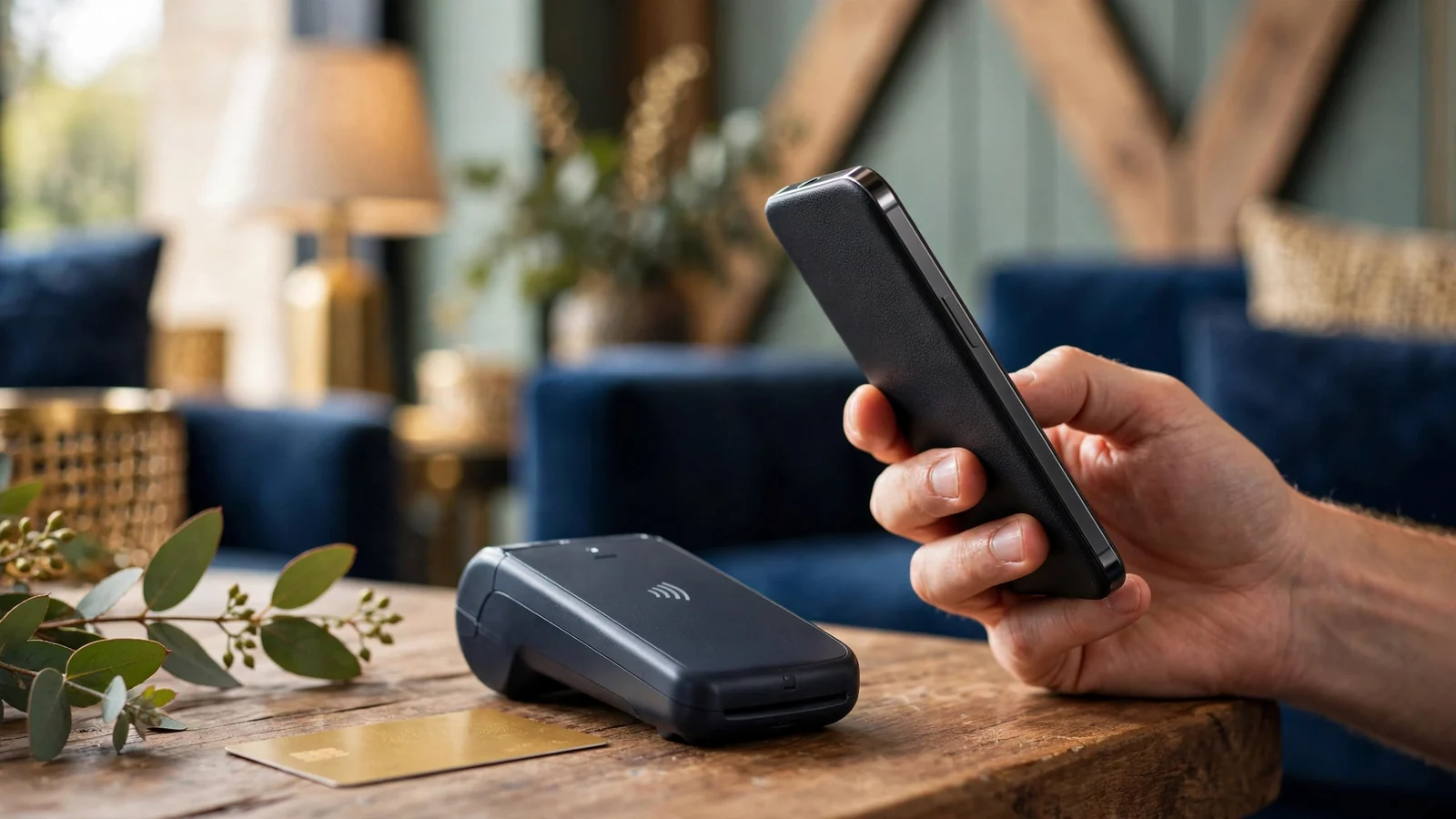
This distinction matters when you are considering whether an Australian casino accepts PayID. Familiarity with bank-linked services cannot be used as evidence that a casino offers PayID, and the presence of other familiar payment choices does not imply that PayID is available alongside them. Payment options are determined by the individual service and can differ between operators. General habits across Australia cannot fill in those details.
Cards and mobile wallets are also not interchangeable from a service’s point of view. A business may accept one payment type but not another, even if both are common in daily life. The same reasoning applies to bank-linked services: people may be comfortable using them, but that says nothing definite about whether an individual casino lists PayID or processes payments through it. A familiar name or category is not confirmation of a specific option.
A specialist review has reported that Visa may be accepted at more Australian online casinos than American Express. Treat that as a claim from that type of source, not as a fixed description of the current market: acceptance can change, and the comparison does not establish anything about PayID. Nor does it tell you whether a particular operator supports a given method.
For a reader trying to understand PayID availability, national payment habits are useful only as background. They help explain why cards, mobile wallets and bank-connected services may feel familiar, but they cannot identify an Australian casino with PayID or verify a PayID listing. The relevant distinction is between a method being familiar to consumers and a service explicitly offering it. One does not prove the other.

That is why broad statements about how Australians pay should not be read as a directory of casino payment options. A method can be widespread in everyday transactions and still not be available on a particular site. Conversely, familiarity with a category does not tell you whether a named method is supported. PayID support requires specific evidence about the service itself; general payment preferences provide context, not proof.
Withdrawal routes and the limits of the available timing evidence
A deposit method and a withdrawal method are not automatically the same route. The available American Express details illustrate this distinction: a player must have deposited with Amex before using it for a casino withdrawal, yet that prior deposit does not mean the casino will return winnings to the card. A specialist review reports that some casinos do not permit Amex withdrawals. The restriction is therefore something to confirm in the relevant cashier or payment terms, rather than something you can infer from seeing Amex listed for deposits.
Timing also needs careful interpretation. A specialist review gives a clearance period of up to five days for Amex casino withdrawals. That is a reported figure, not a guaranteed processing time for every operator or transaction. It does not explain how long any separate review may take, and it cannot be applied to a different payment method. If you are checking a particular withdrawal, distinguish the casino’s processing stage from the time required for the payment route to clear; the reported Amex timing only concerns the latter as described by that review.
Attention: A deposit method and a withdrawal method are not automatically the same route, and a stated clearance time for one method says nothing about another.
This is why an “instant withdrawal” label needs a defined scope. A payment method may be presented as available for deposits without being available for withdrawals, and a stated clearance time for one method says nothing about another. The Amex conditions do not establish whether a casino offers withdrawals through PayID, whether a PayID withdrawal would be available after a PayID deposit, or how quickly such a transfer would arrive. Do not treat Amex’s prior-deposit condition or reported timing as evidence about a PayID route.
Before relying on a displayed withdrawal option, look for terms that explicitly describe withdrawals, not just deposits. Check whether the method is eligible for payouts, whether a matching prior deposit is required, and what stage the stated timing covers. For PayID, those details need to be stated specifically for PayID. A casino with PayID deposits is not thereby confirmed as a casino with PayID withdrawals, and an “instant” claim is not a usable time estimate unless it clearly applies to the withdrawal itself.
Real-money payment claims and the Australian legal boundary
A payment method does not change the legal status of the service taking the payment. Whether an offshore site says it accepts PayID, debit cards or another method, that claim is separate from whether the operator may offer real-money online casino games to people in Australia.
The Interactive Gambling Act 2001 prohibits operators from providing online casino games to people located in Australia. The restriction concerns the operator’s service; it does not explicitly make an Australian player’s use of an offshore casino a criminal offence. The Australian Communications and Media Authority (ACMA) administers enforcement of the Act.

That distinction matters when you assess a claim about a real-money casino using PayID. A payment option cannot establish that the service is lawful in Australia, and the presence of a payment method does not create consumer protections for a player using an offshore casino. Australian consumer law does not protect players who use offshore casinos. If a dispute arises, you should not assume the protections available for domestic consumer transactions will apply.
The same boundary applies to claims about PayID deposits, withdrawals or promotions. A site may describe a payment route or promotion, but those statements do not change the legal position of online casino services offered to Australian residents. Nor does a payment label make a prohibited service permissible.
When reading any real-money offer, keep these issues separate: what the operator claims about payment, what the law permits the operator to provide, and what protections are available to you. The legal position concerns the service itself, not simply the route used to move money. A claim that an online casino accepts PayID therefore cannot, by itself, answer whether you can use that service with the protection of Australian consumer law.
What to verify before treating a payment option as available
A payment option displayed on a page or in a cashier is not, by itself, proof that a transaction can be completed. The payment flow has separate stages: the operator presents a method, you enter the requested details, and the payment is submitted for processing. A failure at a later stage can mean the method was visible but not usable for that transaction.
A cashier display cannot override a decision made by the card provider or bank, as they may block gambling-related transactions at the issuer level.
A specialist review describes an Amex deposit flow in which the player selects Amex in the cashier, enters card details and an amount in Australian dollars, then submits the payment. That sequence explains what information the cashier requests; it does not establish that the payment will be approved. The same specialist review notes that Amex may decline a deposit if it blocks payments to a particular website. Australian banks may also block gambling-related Amex transactions at the issuer level. In either case, a cashier display cannot override a decision made by the card provider or bank.
This distinction matters when assessing a PayID casino payment method. The Amex example illustrates how a displayed method and a completed transaction can differ, but it provides no evidence about PayID. It cannot establish which casino accepts PayID, whether a PayID option appears for a particular customer, or whether a payment would go through. Those questions require information specific to PayID and the relevant service; they cannot be answered by transferring assumptions from another method.
If you encounter a payment claim, separate what it says from what it demonstrates. A page may describe a method, while the cashier may show whether it is currently selectable. Even a selectable option is not proof of successful processing. For Amex, the documented flow and possible issuer-level blocks show why each step matters. They are examples of payment execution, not evidence that you can pay with PayID at a casino.
Keep the distinction precise: “listed,” “selectable,” “submitted,” and “approved” describe different points in a transaction. Evidence about one point should not be treated as confirmation of the next, and details about Amex should not be presented as PayID instructions.

PayID bonuses: no verified terms to report
A PayID payment option and a bonus offer are separate features. A cashier may display a payment method, but that alone does not establish that depositing with it qualifies you for a promotion. Bonus eligibility depends on the offer’s own terms, which must specify how the payment method relates to the promotion.
Before treating a PayID-linked casino bonus as available, look for terms that identify the eligible deposit method and explain what action qualifies. The terms should also state any conditions attached to the offer, such as eligibility restrictions, required account status, or how a bonus is applied. Do not infer these details from a payment logo, a general promotion banner, or wording that mentions deposits without naming PayID.
A no-deposit offer is a different kind of promotion: it does not require a deposit to trigger it, so the presence of PayID in a cashier would not establish that such an offer exists or that it is connected to PayID. Likewise, a promotion advertised as a casino bonus does not become a PayID bonus merely because the site also lists PayID as a payment option.
The practical distinction is simple: payment acceptance concerns whether a transaction method is offered; promotion terms determine whether a particular transaction or account action qualifies for a bonus. Treat the two claims independently. If the published terms do not expressly connect PayID with the offer, do not assume that paying by PayID will unlock it, change its value, or satisfy any promotion condition.
Promotional wording can be broad, while eligibility rules are specific. Read the complete terms attached to the offer rather than relying on a headline. If those terms do not clearly explain the relationship between PayID and the bonus, the claim remains unclear; do not make a deposit on the assumption that a bonus will follow.
What are the deposit and withdrawal limits at the best Amex casinos?
Limits are set by each casino and can differ between operators. Check the casino’s cashier or payment terms for its current Amex deposit and withdrawal limits.
How do you check if casino sites accept Amex deposits?
Look for American Express specifically in the casino’s cashier or payment terms. Jackpot City Casino, Spin Palace, Ruby Fortune, Ignition Casino, Joe Fortune, and PlayAmo are listed as operators that support Amex deposits for Australian players.
How can I know if an online casino will accept American Express?
Check whether American Express appears as a deposit option in that casino’s cashier. Jackpot City Casino, Spin Palace, Ruby Fortune, Ignition Casino, Joe Fortune, and PlayAmo are among the operators listed as supporting Amex deposits for Australian players.
How long do Amex casino deposits take to process?
Amex casino deposits are processed instantly. Withdrawals can take up to five days to clear.
Are there any limits on how much I can deposit or withdraw using American Express?
Yes. Each casino sets its own Amex deposit and withdrawal limits, so check the operator’s cashier or payment terms for the limits that apply to you.
Can I use Amex to withdraw winnings from an Australian online casino?
Some casinos do not allow withdrawals to American Express, and you generally need to have deposited with Amex before using it for a withdrawal. A casino may also charge a withdrawal fee.
Why does my Amex deposit get declined at some casinos but not others?
Amex may block payments to a particular website, or your Australian bank may block gambling-related transactions on the card. Some casinos also do not accept American Express.
Created by the ”Levelupcasinoinfoau.com” editorial team.